Search Property in Benahavís
Search villas, apartments, townhouses, new developments and lifestyle-led homes across Benahavís and nearby prime areas.
Searching for property in Benahavís is rarely as simple as filtering by price and bedrooms. Some buyers begin with a favourite area, such as La Quinta, Los Arqueros, La Zagaleta or El Madroñal. Others start with lifestyle: golf, sea views, privacy, schools, village life, walkability or a lock-up-and-leave apartment.
Our website shows a curated selection rather than every available property. However, this is only part of the market. Through our own listings, trusted collaborating agents and discreet off-market opportunities, we usually have access to a much wider pool of homes across Benahavís and the surrounding prime areas.
Use the search tool below, browse curated collections, or ask Darren & Angelina — your Personal Property Concierge — to prepare a bespoke shortlist around your exact brief.
Advanced Property Search
Use the filters below to search by location, price, bedrooms, property type and lifestyle features. If the results feel too narrow, start broad and then refine.
Tip: if your ideal search produces limited results, try widening the area or removing one lifestyle filter. Many of the best matches are found just outside the most obvious search boundary.
Want Us to Search for You?
Online search is a useful starting point, but the Benahavís property market is fragmented. Some homes appear on public portals, some are shared through collaborating agents, and others are handled discreetly.
If you share your preferred areas, budget, property type, bedroom requirements, view preferences and lifestyle priorities, Darren & Angelina can prepare a focused shortlist from our own listings, trusted collaborators and discreet off-market opportunities.
Start with the Route That Suits You
Some buyers know the exact area they want. Others start with lifestyle: golf, views, privacy, schools, village life, new developments or a ready-to-move-into home. These pathways help you search in the way that feels most natural.
Search by Area
Explore homes in La Quinta, Los Arqueros, La Zagaleta, El Madroñal, Los Flamingos, Benahavís Village and other key residential areas.
Search by Lifestyle
Browse curated collections for golf homes, sea-view properties, gated communities, renovated homes, new developments and more.
Let Us Shortlist for You
Share your requirements and we’ll search across our own listings, trusted collaborators and discreet off-market opportunities.
Popular Property Searches
These curated pathways are designed to help you move quickly into the most common buyer searches.
Sea-View Homes
Apartments, townhouses and villas with open views towards the Mediterranean.
Golf Homes
Homes close to La Quinta, Los Arqueros, Los Flamingos, Atalaya, El Paraíso and nearby golf courses.
New Developments
Off-plan, under-construction and key-ready new homes across Benahavís and neighbouring areas.
Luxury Villas
Private villas, gated estates and statement homes in Benahavís’ most desirable settings.
Homes Near Schools
Family-friendly homes near Atalaya International College, CEIP Daidín and wider school routes.
Signature Collection
Selected homes that stand out for position, presentation, refurbishment, views or lifestyle appeal.
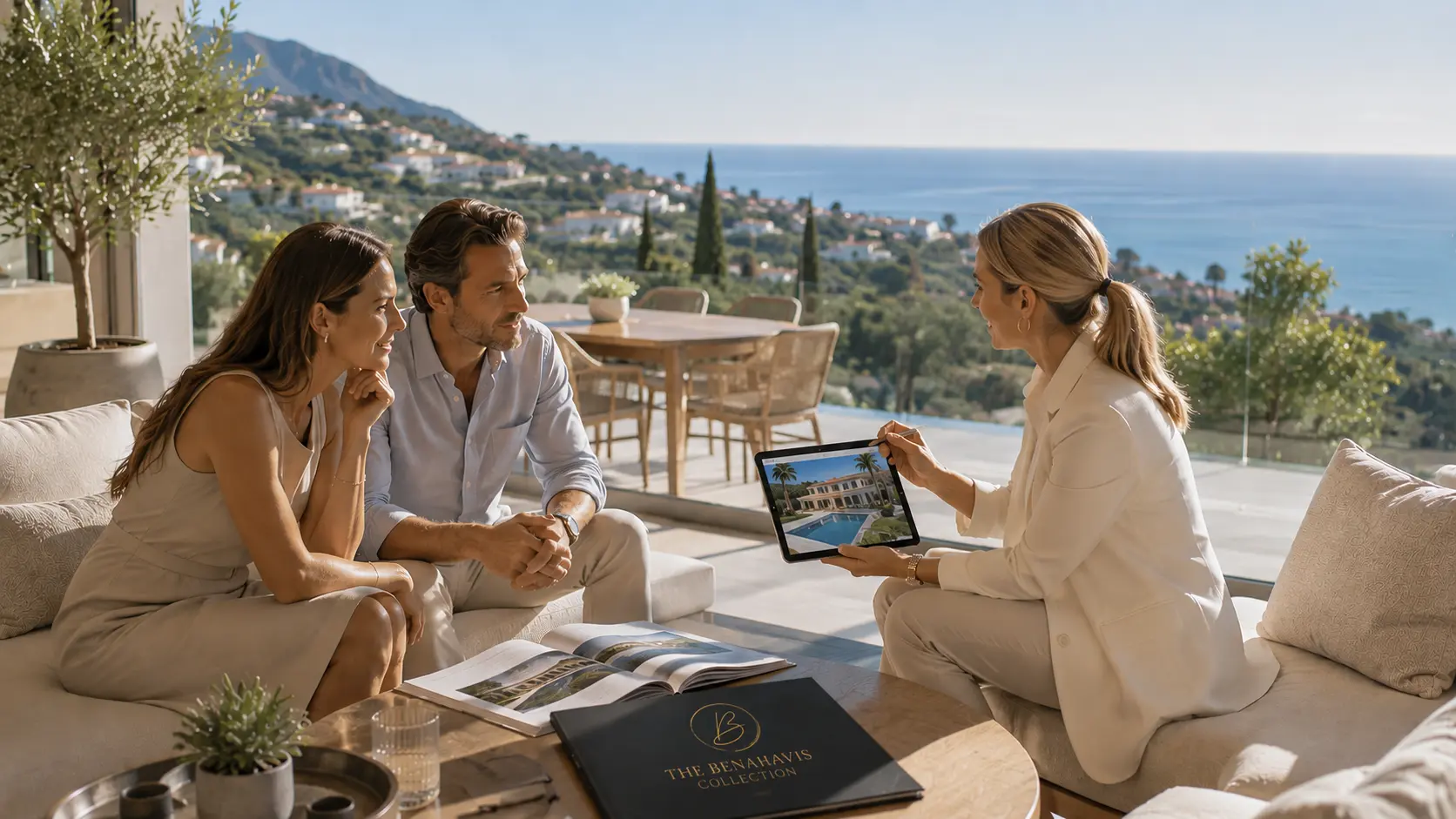
Why a Personal Shortlist Often Works Better
The best property search in Benahavís often combines online browsing with local market knowledge. A search tool can show what is currently published, but it cannot always explain which homes have the best orientation, which communities feel stronger in person, or which properties compare well against others in the same price range.
A bespoke shortlist allows us to compare homes across our own listings, trusted collaborating agents and discreet opportunities that may not be visible online. It also helps avoid wasted viewings, especially if you are visiting Spain for a limited time.
Tell us what matters most — golf areas, views, privacy, walkability, schools, budget, bedrooms, outdoor space, rental potential, refurbishment quality or furniture package — and we’ll help narrow the search to the homes that make the most sense.
Property Alerts
Set up alerts by area, budget, bedrooms and lifestyle. Alerts are useful, but they work best alongside personal search support rather than replacing it.
A good alert can keep you informed when new homes appear. However, a personal search gives more context: whether a property is well positioned, fairly priced, ready to move into, likely to need work, or worth viewing quickly.
Search Tips for Benahavís Buyers
Start with Lifestyle First
Golf, views, privacy, schools and walkability often matter more than the exact map boundary. A lifestyle-led search usually produces better matches.
Compare Neighbouring Areas
La Quinta, Los Arqueros, Atalaya, El Paraíso and Benahavís Village can overlap in buyer appeal, even when they sit in different municipalities or price bands.
Keep One Filter Flexible
A slightly wider budget, broader area or flexible property type can reveal much stronger options than a very narrow search.
Ask About Off-Market Homes
Not every serious opportunity is visible online. Some homes are shared quietly through trusted local relationships.
FAQs About Searching for Property in Benahavís
Do you show every property available in Benahavís?
No. Our website shows a curated selection. Through our own listings, trusted collaborating agents and discreet off-market opportunities, we usually have access to a much wider pool of homes.
Why should I request a shortlist instead of only using the search tool?
A shortlist lets us combine visible listings, collaborating agents and discreet opportunities around your exact criteria, saving time and reducing unsuitable viewings.
Can I search by area and lifestyle?
Yes. You can use the advanced search, browse area guides or explore curated collections such as golf homes, sea-view homes, new developments, renovated homes and gated communities.
Can you help if I am not sure which area suits me?
Yes. That is often where we add the most value. We can compare areas, lifestyle fit, access routes, schools, golf settings and long-term resale appeal.
Do you include properties from other agents?
Yes. Where appropriate, we include suitable homes from trusted collaborating agents in the area, as well as our own listed properties and discreet opportunities.
Continue Your Property Journey
Compare the residential areas and communities that shape the Benahavís property market.
Browse homes by lifestyle, property type, price band, setting and buyer goal.
Understand the taxes and costs involved when buying property in Spain.
Looking for a home outside Benahavís?
Holiday Homes Spain
covers the whole Costa del Sol.