Visas & Residency in Spain
A practical relocation guide to Spain’s main visa and residency options for families, retirees, remote workers and international buyers considering Benahavís.
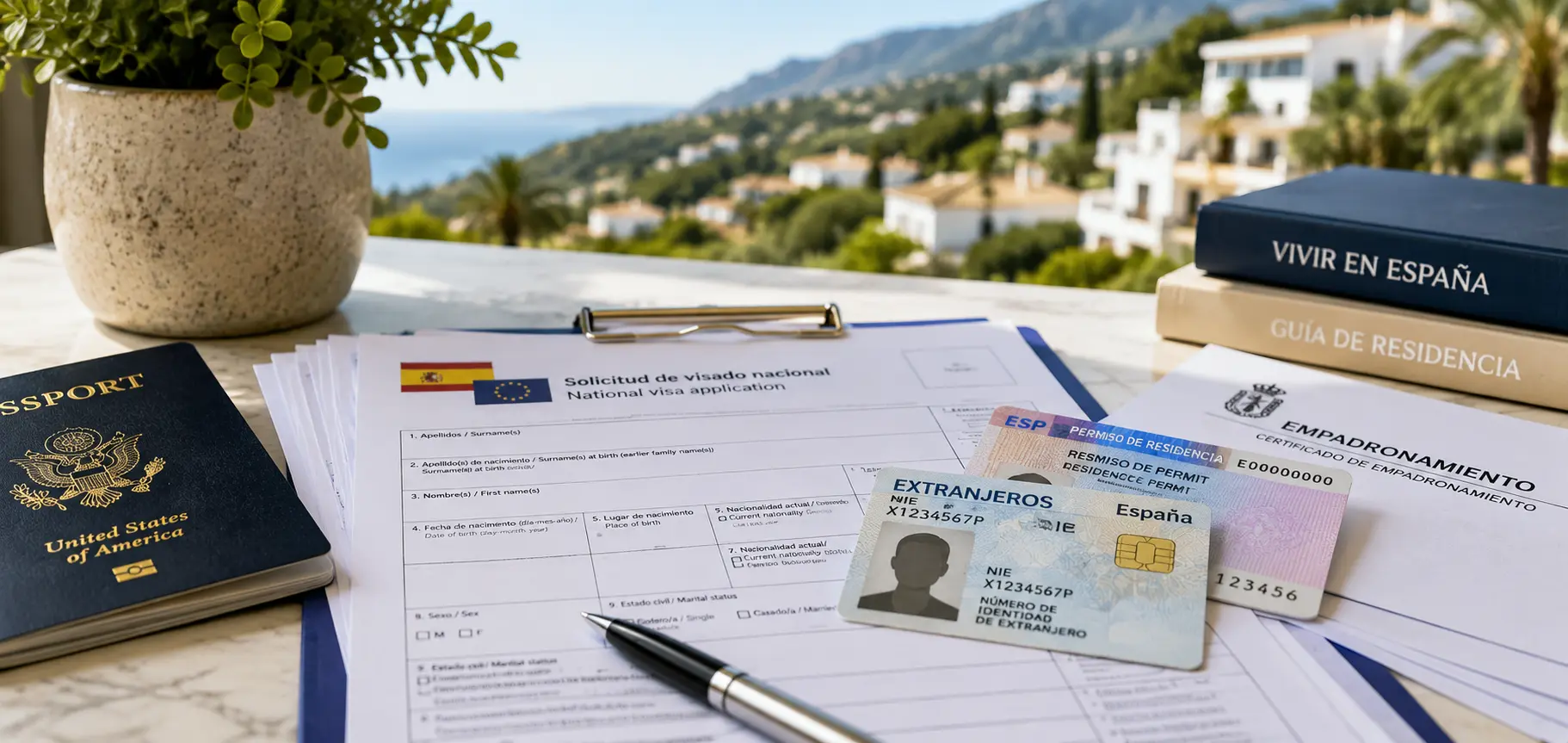
For many people considering a move to Benahavís, understanding visas and residency in Spain is just as important as choosing the right property. The more practical question is often simple: how can you legally spend enough time in Spain to live the life you are imagining?
Spain offers several routes depending on nationality, income, work status, family circumstances and long-term plans. EU citizens follow a very different process from UK, US, Canadian, Australian and other non-EU nationals. Some buyers only need to manage the 90/180-day Schengen rule, while others need a formal visa or residence permit before moving permanently.
This guide is designed as a clear starting point. It explains the main relocation routes, how they affect property planning, and which practical steps usually sit alongside a move to Benahavís — including NIE numbers, TIE cards, empadronamiento, healthcare, insurance and tax residency.
Important: Visa and residency rules can change, and individual circumstances matter. This page is general guidance only and should not replace advice from a qualified immigration lawyer, tax adviser or gestor.
Visas and Residency in Spain: First Question, EU or Non-EU?
The starting point is your nationality. EU, EEA and Swiss citizens have freedom of movement rights and can usually relocate to Spain with a simpler registration process. Non-EU citizens need to understand either short-stay limits or the appropriate visa route before planning a permanent move.
EU, EEA & Swiss Citizens
Usually benefit from freedom of movement, although they still need to register properly if staying long term, organise healthcare access and understand tax residency.
UK & Other Non-EU Citizens
Usually need to manage the 90/180-day rule for short stays, or apply for a visa/residence route if planning to live in Spain more permanently.
The 90/180-Day Rule for Non-EU Visitors
For many non-EU buyers, including UK citizens after Brexit, the first rule to understand is the Schengen 90/180-day rule. In simple terms, many non-EU visitors can spend up to 90 days within any rolling 180-day period in the Schengen Area, which includes Spain.
This can work well for holiday-home owners and flexible second-home use. However, it does not allow full-time living in Spain and can become restrictive for families, retirees or remote workers who want Benahavís to become their main home.
If you expect to spend long continuous periods in Spain, enrol children in school, become tax resident or move your centre of life here, you should explore a formal visa or residency route before relying on short-stay rules.
Main Visa Routes for Relocating to Spain
Spain has several visa and residence options. The right route depends on whether you are retired, financially independent, working remotely, employed by a Spanish company, starting a business, studying or joining family members already resident in Spain.
Non-Lucrative Visa
Often used by retirees and financially independent residents who can support themselves without working in Spain.
Digital Nomad Visa
Designed for eligible remote workers and professionals working mainly for clients or employers outside Spain.
Work, Entrepreneur & Family Routes
More specialist routes may apply for business owners, employees, highly qualified professionals, students or family reunification.
Non-Lucrative Visa: For Retirees and Financially Independent Residents
The Non-Lucrative Visa is one of the most important routes for non-EU citizens who want to live in Spain without working. It is commonly used by retirees, early retirees and financially independent applicants with sufficient savings, pensions or passive income.
The key point is that this visa does not allow you to work in Spain. It is therefore best suited to people who can support themselves through pensions, investments, rental income, savings or other passive income sources.
Applicants normally need to show sufficient financial means, private health insurance, a clean criminal record and a medical certificate. The financial requirement is generally based on 400% of IPREM for the main applicant, with additional amounts required for dependants. These figures can change, so they should always be confirmed before applying.
Best Suited To
- Retirees
- Financially independent families
- Applicants with pensions or passive income
- People not planning to work in Spain
- Long-term residents who want a stable legal base
Read our guide to visas for retirement in Spain →
Digital Nomad Visa: For Remote Workers and International Professionals
Spain’s Digital Nomad Visa, formally linked to international teleworking, is designed for eligible non-EU nationals who work remotely for companies or clients outside Spain.
This route is particularly relevant for entrepreneurs, consultants, remote employees, technology professionals and internationally mobile families who want to base themselves in Spain while continuing overseas work.
Applicants normally need to demonstrate professional activity, income, remote-working eligibility, health insurance and supporting documents. The income threshold is linked to Spain’s minimum wage and may change over time, so current requirements should be verified before applying.
For Benahavís, this visa can be especially relevant because many residents work internationally while choosing the area for privacy, climate, schooling, airport access and quality of life.
Best Suited To
- Remote employees
- Freelancers and consultants
- Business owners with international clients
- Professionals who do not need Spanish employment
- Families relocating while keeping overseas income
Read our Digital Nomad Visa guide →
Golden Visa: Closed to New Applicants
Spain’s Golden Visa programme previously allowed non-EU investors to obtain residency through qualifying investments, including real estate purchases of at least €500,000. This route was particularly popular with some high-net-worth buyers because it offered flexibility and did not require full-time residence in Spain.
However, Spain’s Golden Visa programme closed to new applications in April 2025. Existing holders may still have rights depending on their circumstances and renewal conditions, but new property buyers should not assume that purchasing a home in Spain will create a residency route.
This is an important change for Benahavís buyers. A property purchase can still support a relocation plan, but it no longer replaces the need to choose the correct visa or residency pathway.
NIE, TIE and Empadronamiento
Visa and residency planning often involves several Spanish administrative terms that can feel confusing at first.
NIE
A foreigner identification number used for tax, legal and property matters. Buyers normally need one before completing a property purchase.
TIE
A physical residence card for many non-EU residents once their residence status has been approved.
Empadronamiento
Town hall registration confirming where you live locally. It can be important for healthcare, schools and administrative processes.
Our NIE & Residency guide covers this in more detail.
Healthcare and Insurance Requirements
Healthcare planning is closely connected to residency. Many visa applications require comprehensive private medical insurance with no co-payments and coverage equivalent to Spain’s public healthcare system.
Some residents later access the Spanish public healthcare system through employment, self-employment, pension arrangements or other eligibility routes. Others continue using private insurance long term because it offers faster specialist access and English-speaking support.
Families relocating with children, retirees and applicants with pre-existing conditions should check insurance options early, because medical history, age and visa requirements can affect policy availability and pricing.
Tax Residency and the 183-Day Question
Residency for immigration purposes and tax residency are not always the same thing, but they often overlap in practice.
A common rule of thumb is that spending more than 183 days in Spain during a calendar year can make you Spanish tax resident. However, tax residence can also depend on where your centre of economic or family interests sits.
This is especially important for business owners, retirees with overseas pensions, remote workers, investors and families with assets in more than one country.
Before relocating permanently, it is wise to speak with a tax adviser who understands both Spain and your home jurisdiction.
Read about taxes on buying and owning property in Andalucía →
How Visa Choice Affects Property Planning
Your visa route can influence your property search more than many buyers expect.
A second-home buyer restricted by the 90/180 rule may prioritise lock-up-and-leave convenience, security and rental flexibility. A family relocating under a long-term residence route may focus more on schools, commuting, healthcare and year-round community. Retirees may prioritise accessibility, healthcare proximity and manageable running costs.
For this reason, the best property is not always the one that looks most impressive online. It is the one that fits your legal stay, daily life and long-term plan.
Planning a Move Around Residency?
Our website shows a hand-picked collection of homes in and around Benahavís. However, this represents only part of the market.
Through collaborating agencies and discreet off-market opportunities, we typically work with access to around 600 properties across Benahavís and the surrounding area when our own listings, partner inventory and private opportunities are considered together.
Tell us how you expect to use the home — second home, retirement base, family relocation or remote-working residence — and Darren & Angelina, your Personal Property Concierge, can prepare a shortlist aligned with your practical relocation route.
Visas and Residency in Spain FAQs
Can UK citizens live in Spain after Brexit?
Yes, but UK citizens are now generally treated as non-EU nationals. Short stays are usually governed by the 90/180-day rule, while longer stays normally require an appropriate visa or residence route.
Does buying property in Spain give residency?
No. Since Spain’s Golden Visa closed to new applications in April 2025, buying property no longer creates a residency route for new applicants.
What is the best visa for retiring to Spain?
For many non-EU retirees, the Non-Lucrative Visa remains one of the main options, provided they can show sufficient financial means, private health insurance and meet the required documentation criteria.
Can remote workers move to Spain?
Eligible non-EU remote workers may be able to use Spain’s Digital Nomad Visa or international telework route, depending on income, professional activity and where their clients or employer are based.
Do I need private health insurance for a Spanish visa?
Many visa routes require comprehensive private medical insurance. Requirements vary by route, so applicants should check the latest rules before applying.
When should I speak to a lawyer or tax adviser?
Ideally before committing to a relocation timetable or property purchase. Immigration status, tax residency, healthcare and property ownership often interact, especially for international families and retirees.
Related Reading
Relocate to Benahavís
The main relocation guide covering schools, healthcare, costs and practical planning.
Healthcare in Benahavís
Understand healthcare access, private insurance and medical services for residents.
Cost of Living in Benahavís
Plan realistic monthly costs before deciding how and where to relocate.
Purchase Costs in Andalucía
Understand buying costs, transfer tax, legal fees and completion budgets.
Taxes on Buying and Owning
Understand property ownership taxes and residency-related considerations.
For official visa information, visit the Spanish Ministry of Foreign Affairs website.
Looking for a home outside Benahavís?
Holiday Homes Spain
covers the whole Costa del Sol.