Benahavís Traditions
Romería de la Virgen del Rosario in Benahavís: History, Route & 2026 Guide
Every 7 October, Benahavís leaves the village for the countryside in honour of its patron saint. In 2026, this much-loved pilgrimage reaches a special milestone: 40 years of the modern Romería de la Virgen del Rosario.
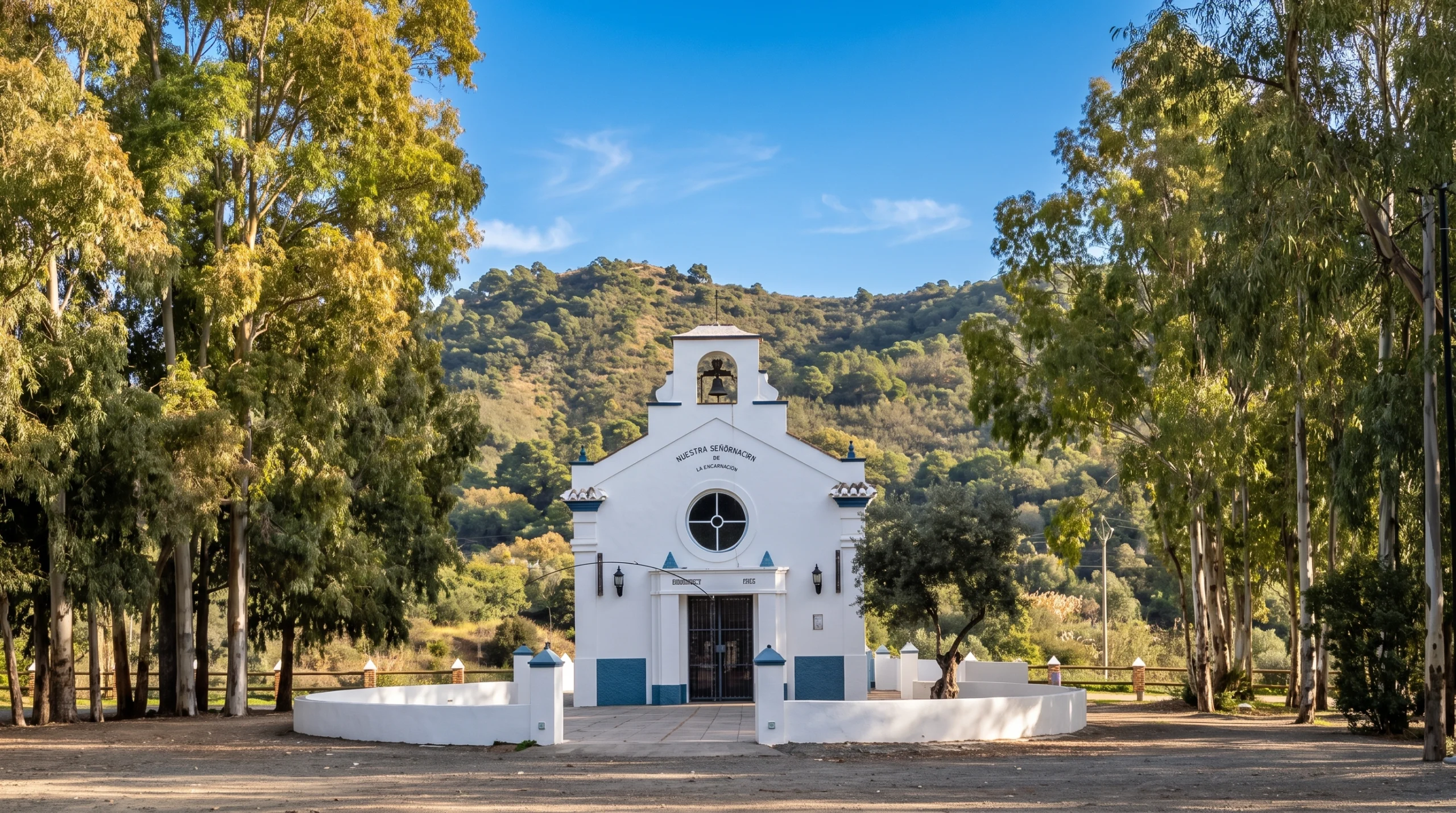
For one day each October, the rhythm of Benahavís changes. The Virgen del Rosario leaves the village and is accompanied towards her rural hermitage at Campanes, where neighbours, families and visitors gather for a day that brings together religious devotion, music, food and community life.
This is the Romería de la Virgen del Rosario, celebrated on 7 October in honour of the patron saint of Benahavís. In 2026, the occasion carries particular significance: the Benahavís Romería celebrates 40 years since the modern pilgrimage began in 1986.
For international residents and visitors, it is also one of the best opportunities to see another side of the municipality. Beyond its restaurants, golf courses and residential communities, Benahavís remains a living Andalusian pueblo with its own stories, faith, traditions and annual rituals. Our wider guide to the history and character of Benahavís explores how that local identity has endured as the municipality has changed.
2026 Anniversary
40 Years of the Benahavís Romería
Benahavís Town Council dates the modern Romería de Nuestra Señora del Rosario from 1986. On Wednesday 7 October 2026, the village will therefore mark its 40th anniversary with the traditional pilgrimage from the church to the hermitage at Campanes.
What Is a Romería?
There is no perfect one-word English translation for a romería. It is part pilgrimage, part religious festival and part country gathering.
The Real Academia Española defines a romería first as a journey or pilgrimage made out of devotion to a sanctuary, and secondly as a popular celebration held in the countryside near an ermita or sanctuary, traditionally involving food, dancing and communal festivities. That combination explains the atmosphere particularly well: the journey and the religious observance matter, but so does everything that happens once people arrive.
Across Andalucía, romerías often bring together elements that elsewhere might be treated as separate occasions. Faith, family, music, traditional dress, food, horses, countryside and community can all belong to the same day. Some Spanish romerías have become enormous events; Benahavís retains a much more intimate village character.
The Benahavís Romería Route at a Glance
The official 2026 programme describes the pilgrimage simply as leaving the church and travelling to the hermitage at Campanes. The graphic below is therefore deliberately schematic rather than a turn-by-turn walking map.
Romería Route · Schematic
From Benahavís Village to the Campanes Hermitage
Benahavís Village
The day begins around the village centre before the pilgrimage departs.
Iglesia del Rosario
The Virgen del Rosario leaves the church at 11:00 in the 2026 programme.
Into the Countryside
The procession moves away from the pueblo towards the Guadalmina valley and Campanes plain.
Ermita at Campanes
The pilgrimage arrives at the Ermita de Nuestra Señora del Rosario for Mass and the afternoon gathering.
Schematic only. Follow the official procession and any Ayuntamiento instructions on the day rather than using this graphic for navigation.
Where Does the Romería Take Place?
The journey begins in Benahavís village, the traditional social and cultural heart of the municipality, and finishes at the Ermita de Nuestra Señora del Rosario on the Campanes plain south of the pueblo.
That movement from village streets into the surrounding landscape is central to the idea of a romería. This is not simply a procession around the historic centre. The destination is a rural hermitage, and the countryside gradually becomes part of the celebration.
The hermitage sits in the Guadalmina countryside close to some of the natural landscapes for which Benahavís is known. The Charco de las Mozas lies farther up the corridor towards the village and also appears in one of the most enduring local legends connected with the Virgen del Rosario.
Benahavís Romería 2026: Programme for 7 October
For the 40th anniversary, Benahavís Town Council has published the following programme for Wednesday 7 October 2026:
08:30–10:30 — Chocolate and churros breakfast
11:00 — Departure from the church towards the hermitage
13:00 — Holy Mass at the hermitage
13:00–19:00 — Inflatable attractions for children
14:00 — Live music with Orquesta Kalima
14:00 — Free paella for those attending

Applying for a 3 × 3 Metre Marquee
For 2026, applications for the 3 × 3 metre marquees open on Tuesday 29 September and close at 10:00 on Monday 5 October.
Applications must be submitted through the Town Council's official registry, either in person at the Ayuntamiento or through the Benahavís Sede Electrónica →
The marquees help give the afternoon its distinctive atmosphere. Groups settle in for food, conversation and music, turning the area around the hermitage into something closer to a large village gathering than a conventional public event.
Why Is the Romería Held on 7 October?
The date is not arbitrary. 7 October is the Catholic memorial of Our Lady of the Rosary, or Nuestra Señora del Rosario, the patron saint of Benahavís.
The feast became closely associated with the Battle of Lepanto in 1571. Church accounts record that Pope Pius V connected the victory with prayers to the Rosary; the commemoration later developed into the feast of Our Lady of the Rosary. Whatever a visitor's own religious background, that wider history helps explain why the same date appears in patronal celebrations in towns across Spain.
In Benahavís, however, the significance is distinctly local. The Diocese of Málaga lists the Virgen del Rosario as the municipality's patroness and identifies 7 October with the annual romería.
The Legend of the Virgen, the Charco de las Mozas and Cholera
Alongside the documented history sits a much more intimate Benahavís story.
According to local tradition, during a cholera epidemic in the mid-19th century villagers decided to move the image of the Virgen del Rosario away from Benahavís for safekeeping. The image was placed on a cart pulled by mules and the journey began away from the village.
The story says that when the procession reached the area of the Charco de las Mozas, the cart became impossibly heavy and the animals could go no farther. When the villagers turned back towards Benahavís, the weight seemingly disappeared and the journey became easy again.
Generations interpreted this as a sign that the Virgen did not wish to leave her village. The tradition goes on to connect her protection with Benahavís escaping the worst effects of the cholera outbreak.
An important distinction: this is local tradition, not a claim of established historical fact. José Álvarez, Hermano Mayor of the Hermandad de Nuestra Señora del Rosario, has himself described it as a legend when recounting the story publicly.
That does not make the story unimportant. Local legends often reveal how a community understands its relationship with a place. In this case, the Virgen del Rosario, the river landscape and the identity of Benahavís have become intertwined in a story passed between generations.
From 1986 to the Present Day
The modern romería began in 1986. Since then, each October the Virgen has been accompanied from the heart of the pueblo towards Campanes, with different generations of Benahavís families sharing the same journey.
Accounts of the celebration describe a procession accompanied by guitars, castanets, drums, flowers, traditional songs and flamenco dress. At the hermitage, the formal pilgrimage gives way naturally to a day in the countryside, where religious observance sits alongside food, music and time spent together.
The present hermitage is considerably younger than the devotion itself. Local accounts date its construction to 2001, describing it as the result of an effort by a small group of Benahavís residents and families. The building bears the understated white-and-blue character of a rural Andalusian ermita and now provides a permanent focal point for the October pilgrimage.
Forty years is not ancient history in the conventional sense. Yet traditions do not need to be medieval to become meaningful. Four decades are enough for children who once walked beside their parents to return with children and grandchildren of their own.
Is the Benahavís Romería Only for Local Residents?
No. Although the romería is deeply rooted in local families and parish tradition, it is also one of those occasions when newer residents and visitors can experience village life from the inside rather than simply observe it from a restaurant terrace.
You do not need to be Spanish, Catholic or a lifelong resident to appreciate the day. Visitors should, of course, remember that the procession and Mass have genuine religious meaning for many of those taking part, but the wider gathering is also a social and community celebration.
For anyone newly living in the municipality, attending events such as the romería is one of the simplest ways to understand that Benahavís is more than a collection of attractive residential areas. The pueblo still provides a cultural centre of gravity for the wider municipality.
What to Expect If You Go
The morning begins in and around the village before the procession leaves for the hermitage. Comfortable footwear is sensible, particularly if you plan to accompany the pilgrimage rather than simply meet the gathering at Campanes. October is usually far gentler than midsummer, but sun protection and water are still worth carrying.
The atmosphere becomes progressively more informal after Mass, with families and groups settling around the marquees for the afternoon. The 2026 programme includes children's attractions, live music and a free paella, so the event is designed to work as a full community day rather than simply a short procession.
Because this is a live local event, timings, access arrangements and traffic measures can change. Before travelling, check the latest information from the Ayuntamiento de Benahavís, particularly if weather conditions are uncertain.
More Than a Fiesta
Modern Benahavís can sometimes appear to be defined by what surrounds the village: private estates, contemporary villas, golf resorts and an increasingly international population. The romería is a reminder that the municipality also has a much older emotional centre.
For some participants, 7 October is first and foremost a day of religious devotion. For others, it is family tradition, a reunion with old friends or simply a day in the countryside that has been part of the calendar for as long as they remember.
That mixture is probably one reason the Romería de la Virgen del Rosario has endured. Forty years after the modern pilgrimage began, the people of Benahavís will once again leave the village with their patron saint and make their way towards Campanes. The municipality around them has changed enormously since 1986. The journey continues.
Event information was checked against the official Benahavís Town Council programme available at the time of publication. Local traditions and the cholera story are identified as legend where appropriate. Programme details and access arrangements may be updated by the Ayuntamiento.
Useful sources:
Ayuntamiento de Benahavís — Romería de Nuestra Señora del Rosario 2026
Diócesis de Málaga — Nuestra Señora del Rosario, Benahavís
Real Academia Española — definition of “romería”
AZ Costa del Sol — local history, legend and interviews about the Benahavís Romería
Related Reading
Explore more of the traditions, history and village life that give Benahavís its distinctive character.
Local Life
What’s On in Benahavís
Follow the rhythm of village fiestas, cultural events, seasonal traditions and local life throughout the year.
History
History and Character of Benahavís
From Moorish origins and mountain geography to the village traditions that still shape Benahavís today.
Area Guide
Benahavís Village
Discover the whitewashed pueblo at the centre of the municipality, including its restaurants, streets, landscape and everyday atmosphere.