Costa del Sol | Travel & Infrastructure
Málaga Airport’s €1.5 Billion Expansion: What It Really Means for the Costa del Sol and Benahavís
Málaga-Costa del Sol Airport is preparing for its biggest transformation since Terminal 3 opened in 2010. But what is actually being built, when will it happen, and why could it matter to people living, visiting or owning a home in Benahavís?
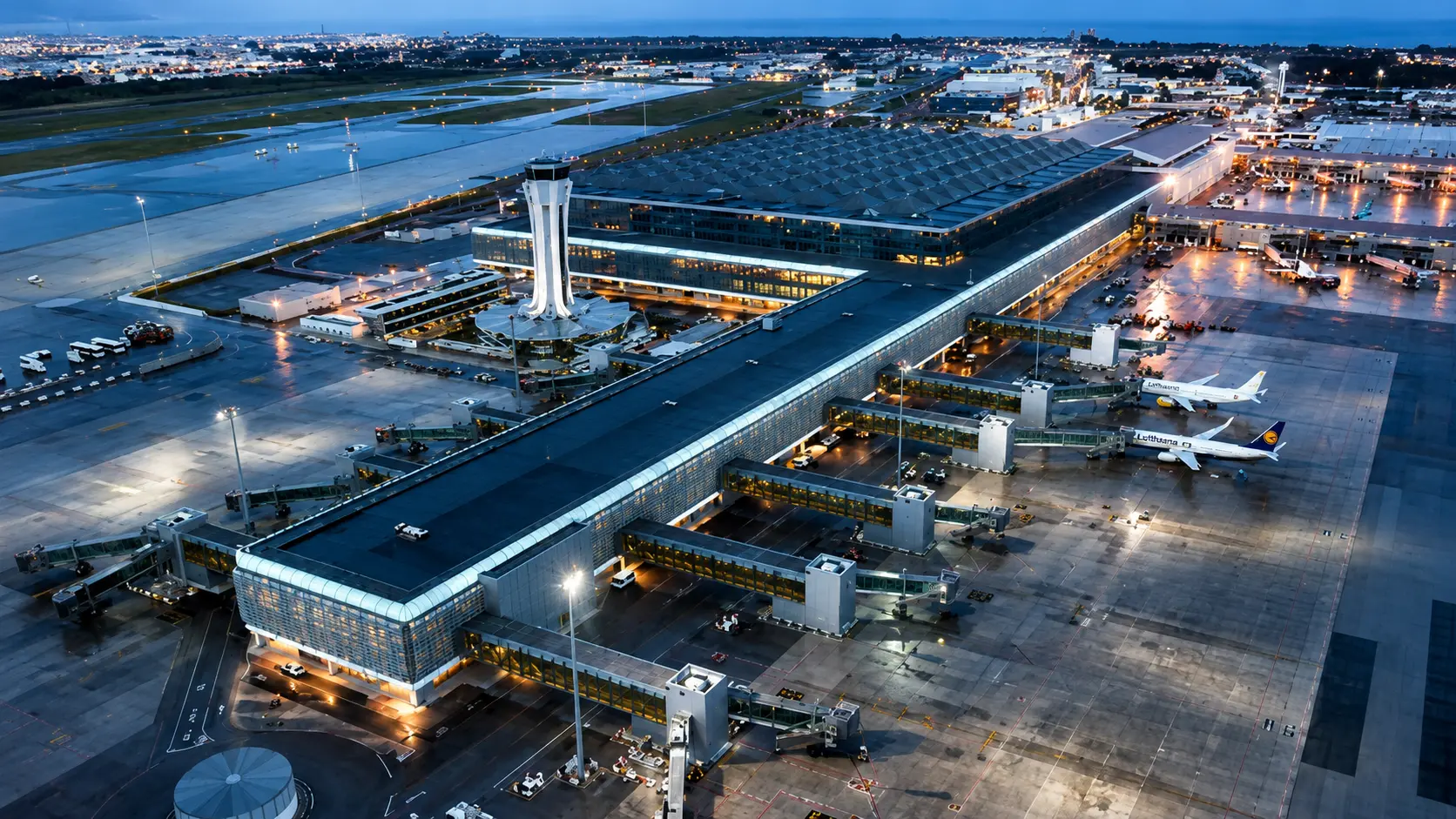
For anyone who regularly travels between the Costa del Sol and the rest of Europe, Málaga-Costa del Sol Airport can sometimes feel like a victim of its own success. What was once regarded principally as a holiday airport has evolved into one of Spain's busiest international gateways, serving a region where tourism, second-home ownership, permanent international residency and business increasingly overlap.
That evolution is now accelerating. Aena is preparing an investment of approximately €1.5 billion to expand and substantially remodel Málaga Airport, in what it describes as the most ambitious transformation of the airport since Terminal 3 opened in 2010.
There has been some confusion about what this means. Despite reports elsewhere, the Málaga airport expansion is not simply receiving a separate new terminal, the runways are not being extended, and the main construction work is not already underway. The real project is both more complex and more significant: a fundamental reworking of the terminal area intended to prepare the airport for decades of further growth.
The Málaga Airport expansion at a glance
Estimated investment: approximately €1.5 billion
Target capacity: initially around 36 million passengers per year
Terminal area: planned increase from around 80,000 m² to approximately 140,000 m²
Current phase: design and technical development
Target for major works to begin: around 2028
Full programme: likely to extend into the 2030s as different phases are completed
Why Málaga Airport needs to grow again
The numbers explain much of the urgency. Málaga-Costa del Sol Airport handled a record 26.76 million passengers in 2025, an increase of 7.4% in just one year. Almost 22.25 million of those passengers travelled on international routes.
That made Málaga the fourth-busiest airport in Spain, behind Madrid, Barcelona and Palma de Mallorca. More importantly, growth has continued in 2026. More than 16.2 million passengers had already passed through the airport during the first seven months of the year.
This is therefore not an expansion being built in anticipation of some distant tourism boom. It is a response to growth that has already happened. Passenger numbers have risen significantly beyond their pre-pandemic level, while the character of Málaga's traffic is becoming increasingly international.
Not a new airport — but an almost completely reworked terminal
Perhaps the easiest misconception to clear up is the idea that Málaga is simply building another terminal alongside T3.
The proposal is considerably more integrated than that. The terminal area is expected to grow from approximately 80,000 square metres to around 140,000 square metres, while the old Terminal 1 building and the current B and C boarding piers are planned for demolition as the layout is reorganised.
The result should feel less like adding another building and more like creating a larger, more coherent airport around the existing infrastructure.
A much bigger focus on international and long-haul travel
One of the most interesting elements is the planned new pier dedicated to non-Schengen traffic, complete with centralised border control.
That matters because Málaga's future is increasingly about more than short European leisure flights. The airport already offers an extraordinarily wide network and has direct links to destinations including New York/Newark, Montréal and Doha, alongside extensive connections across the UK, Scandinavia, Germany, France, the Netherlands and the rest of Europe.
A larger non-Schengen operation does not guarantee that airlines will suddenly launch dozens of new long-haul routes; airlines make those decisions according to demand, aircraft availability and commercial viability. What it does do is remove an important infrastructure constraint and make Málaga better equipped to accommodate them.
That could prove particularly important for connections with North America, the Middle East and potentially other markets further afield.
Why the non-Schengen expansion matters
The Costa del Sol already attracts residents, property owners and visitors from well beyond the European Union. Increasing the airport's ability to process non-Schengen passengers efficiently makes further international connectivity easier to accommodate and should reduce one of the pinch points experienced during busy arrival and departure periods.
Security, passports and baggage should become easier too
Capacity is not simply about how many aircraft can land. Some of the greatest frustrations at a busy airport happen inside the building: queues at security, congested passport control, crowded gates and delays retrieving luggage.
The Málaga plans therefore include a new centralised security area with automated lanes and modern cabin-baggage screening technology, together with centralised border controls and a redesigned baggage-handling system.
There will also be more aircraft contact positions, allowing additional passengers to board and disembark directly through airbridges rather than travelling between aircraft and terminal by bus.
For regular travellers, these less glamorous changes may ultimately make a greater difference than the architecture itself.
More space once you are inside
Passenger facilities are also being enlarged. Aena has indicated an increase of around 41% in areas dedicated to passenger services and commercial activity, while VIP lounge space is expected to increase by approximately 43%.
That reflects how Málaga has changed. An airport handling approaching 27 million passengers annually needs to work not only as an arrival point for traditional package tourism, but also for frequent flyers, business travellers, second-home owners and international residents who may pass through it many times each year.
What is happening to the runways?
One frequently repeated claim is that Málaga's runways are being extended to accommodate larger aircraft. That is not what Aena has announced.
The airport already has two runways. The planned airfield works instead centre on new taxiways and improved aircraft circulation between the runways and parking aprons. The objective is to make the existing airfield operate more efficiently and reduce unnecessary bottlenecks as movements increase.
This distinction is important. The €1.5 billion programme is primarily a terminal-capacity and operational-efficiency project rather than a conventional runway expansion.
When will the Málaga Airport expansion actually happen?
This is where some reports have been particularly optimistic.
Aena formally set the expansion process in motion in 2025. In May 2026, the design work was awarded to a consortium comprising Cemosa, Sener Mobility and Fairbanks Arquitectos.
The investment sits within the wider planning framework surrounding DORA III, Spain's airport investment period covering 2027 to 2031. The aim previously outlined by airport management has been to begin major physical construction around 2028, rather than suggesting that the terminal expansion is already being built today.
Nor should 2031 necessarily be viewed as the date when every part of the new airport will suddenly open. Given the scale of the project, the need to keep one of Spain's busiest airports functioning throughout construction and the phased nature of airport development, completion of the overall transformation is expected to stretch into the following regulatory period in the 2030s.
A realistic timeline
2025: Aena formally launches the expansion process and technical tenders.
2026: Design contract awarded and detailed project development progresses.
2027–2031: DORA III investment period, during which the main construction programme is intended to begin.
Around 2028: Previously stated target for the start of major physical works.
2030s: Progressive completion and commissioning of the wider airport transformation.
What could all of this mean for Benahavís?
The significance for Benahavís is easy to underestimate because the airport is some distance away. Yet international accessibility is one of the less visible foundations of the lifestyle enjoyed here.
Benahavís may feel peaceful and removed from the busier coastal strip, but its residents include people whose families, businesses and social lives remain spread across several countries. For a second-home owner, a permanent international resident or someone dividing their year between Spain and elsewhere, the practicality of reaching home matters enormously.
Better airport capacity therefore has benefits that go considerably beyond tourism.
More choice for international owners and residents
More airport capacity gives airlines greater room to add frequencies and potentially new destinations when demand supports them. For households travelling repeatedly between Benahavís and the UK, northern Europe, the Middle East or North America, even one additional direct service or a more convenient flight time can materially change how practical life in southern Spain feels.
A stronger year-round destination
The Costa del Sol is becoming steadily less seasonal. Benahavís in particular has a strong year-round residential population, golf communities, restaurants, schools and businesses that do not disappear when summer ends.
Greater flight frequency outside the traditional summer peak can reinforce that transition, making shorter winter stays, long weekends and spontaneous visits easier for overseas owners.
An advantage when buyers compare international locations
For an international buyer considering several destinations, accessibility often sits quietly alongside sunshine, property, schools, healthcare and lifestyle.
A beautiful home becomes much less attractive if reaching it requires several connections or an entire day of travel. Benahavís benefits from combining a relatively secluded environment with access to one of southern Europe's busiest airports.
An airport capable of handling up to 36 million passengers, particularly with stronger non-Schengen facilities, helps protect that advantage as international demand grows.
Could the expansion support property demand?
It would be too simplistic to suggest that a larger airport automatically means higher property prices. Property values in Benahavís are influenced by a much broader combination of supply, international wealth, planning restrictions, financing conditions, taxation, lifestyle and the characteristics of individual communities.
Infrastructure does, however, form part of the long-term picture.
International buyers have choices. When a destination offers direct flights, an efficient airport, good roads, international schools, established healthcare, year-round restaurants and an attractive climate, the barriers to owning or relocating there become progressively lower.
For Benahavís, the airport expansion is therefore less a short-term property story than another piece of infrastructure supporting the area's long-established international appeal.
There is one important missing piece: getting west from the airport
A bigger airport does not solve every transport problem on the Costa del Sol.
For Benahavís, Marbella, Estepona and much of the western Costa del Sol, the final part of the journey still depends overwhelmingly on the road network. The coastal railway currently terminates at Fuengirola rather than continuing west towards Marbella or Estepona, while traffic on the A-7 can make journey times unpredictable during busy periods.
That matters because an airport capable of receiving substantially more passengers also places greater emphasis on how those passengers disperse once they arrive.
The airport expansion is therefore a major piece of the region's future infrastructure, but it should not be confused with a complete solution to the Costa del Sol's transport requirements. Better connections west of Málaga remain an important part of the wider conversation.
A different kind of gateway to the Costa del Sol
The most interesting thing about Málaga Airport's expansion may not be its size, but what it says about how the Costa del Sol itself has changed.
Málaga is no longer simply an airport that becomes busy when northern Europeans fly south for their summer holiday. It is the international gateway to a region with a large overseas residential population, a growing technology and business economy, established luxury tourism and a property market connected to buyers across Europe and increasingly beyond it.
For Benahavís, this matters. The municipality's appeal has always partly rested on an unusual combination: privacy without isolation. You can live among mountains, golf courses and protected landscapes while remaining connected to Marbella, the Mediterranean coast and a major international airport.
The €1.5 billion transformation of Málaga-Costa del Sol Airport should help preserve that balance as the region continues to grow. We simply need to be patient: this is a project for the next decade, not next summer.
Source note: Project details and passenger figures are based primarily on published information from Aena, its airport investment documentation and the organisations appointed to design the Málaga-Costa del Sol Airport expansion. Timings remain indicative and may change as detailed design, approvals, procurement and construction progress.
Related Reading
Discover more about visiting, living in and getting to know Benahavís.
Explore
A First-Time Visitor Guide to Benahavís
From the village and mountain landscapes to golf communities and the nearby coast, discover how to experience Benahavís for the first time.
Living
Living in Benahavís
A closer look at everyday life in one of the Costa del Sol's most distinctive municipalities, from practicalities to lifestyle.
Areas
Best Areas in Benahavís
Compare the landscapes, communities and lifestyles found across Benahavís, from golf valleys to private mountain estates.
Looking for a home outside Benahavís?
Holiday Homes Spain
covers the whole Costa del Sol.