Healthcare in Spain: A Guide for Expats & Buyers
How public and private healthcare works in Spain for UK, U.S. and Canadian expats, including S1 forms, Convenio Especial, visa insurance and Costa del Sol services.
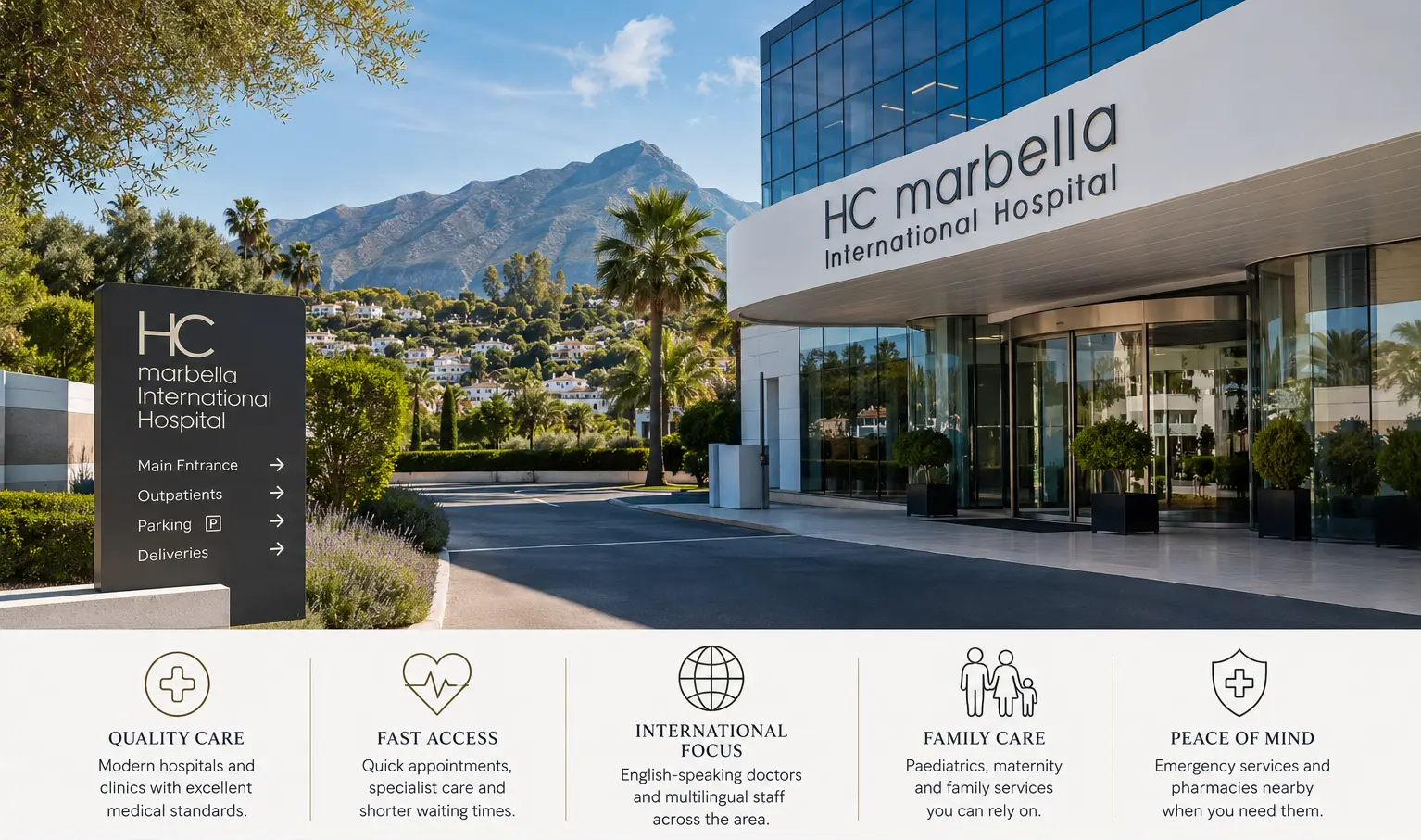
Healthcare in Spain for expats is one of the most important practical subjects to understand before moving, retiring or buying a home here. Spain’s healthcare system is one of the reasons so many people choose to live on the Costa del Sol, combining public healthcare, private medical insurance, modern hospitals and a strong culture of preventative care.
For many international residents, healthcare quickly becomes one of Spain’s greatest everyday advantages. Consultations and diagnostic tests can feel more accessible than in some other countries, private cover is often more affordable than buyers from North America expect, and coastal areas such as Marbella, Benahavís and Estepona have a strong network of public and private providers.
This guide explains how healthcare in Spain works in practice, from public and private systems to visa requirements, S1 forms, the Convenio Especial, emergency services and private medical support on the Costa del Sol. For the wider financial picture, you may also want to read our Cost of Living on the Costa del Sol guide.
Why Spain’s Healthcare System Stands Out
Spain’s healthcare model is built around public access, regional delivery and a strong primary-care network. The public system is not perfect, and waiting times can vary by region and speciality, but Spain continues to perform strongly on many health outcomes and remains highly attractive to international residents.
For expats from the UK, Canada and the United States, the experience can feel very different. Public healthcare is available to those who qualify, while private healthcare offers faster access, more choice and English-speaking support in many coastal areas. This blended model is one reason Spain works so well for retirees, remote workers, families and second-home owners.
For buyers considering a home on the Costa del Sol, knowing you can build a clear healthcare plan adds a layer of security that goes far beyond the property itself.
Public Healthcare in Spain: The Sistema Nacional de Salud
Spain’s universal public healthcare system, the Sistema Nacional de Salud, is largely funded through taxation and managed by the autonomous regions. Once you are properly registered and entitled to use the system, you can normally access a wide range of services through local health centres, public hospitals and specialist referrals.
Public healthcare typically includes GP appointments, preventive check-ups, specialist referrals, hospital consultations, emergency treatment, screenings and long-term condition management. Prescription medication is usually subsidised rather than fully free, with the patient contribution depending on circumstances.
In major hospitals and many coastal areas, English-speaking staff or translation support may be available, although this should not be assumed in every setting. For international residents, it is still useful to keep key medical notes, prescriptions and insurance documents organised in Spanish where possible.
Who Can Access Public Healthcare in Spain?
Eligibility depends on your residency position, nationality, work status and whether another country remains responsible for your healthcare costs. In broad terms, people usually access Spanish public healthcare through one of several routes.
Working residents
If you work in Spain and contribute to Spanish social security, you usually build entitlement to public healthcare through the social security system.
UK and EU pensioners with an S1 form
Some pensioners, including eligible UK State Pension recipients, may qualify for healthcare in Spain using an S1 form, with their home country covering the cost of their Spanish public healthcare.
Non-working residents using private insurance first
Many non-EU residents, including those arriving through the Non-Lucrative Visa, begin with private medical insurance before becoming eligible for other routes later.
Convenio Especial after legal residence
The Convenio Especial may allow certain non-working residents to pay into the public system after meeting the qualifying conditions, including a period of legal residence.
The Convenio Especial: Public Healthcare for Non-Working Residents
For retirees and non-working residents who are not otherwise covered, Spain offers the Convenio Especial, a special agreement that allows eligible residents to pay a monthly contribution in exchange for access to the public healthcare system.
As a broad guide, the monthly contribution is commonly quoted at around €60 for adults under 65 and around €157 for those aged 65 and over. This can make it attractive for some long-term residents, especially those who no longer need visa-compliant private insurance or who do not qualify through employment or an S1 form.
However, the Convenio Especial is not usually the first step for new arrivals. It generally becomes relevant after you have already been legally resident for the required period and meet the local application criteria. It is also important to check the rules in Andalucía at the time you apply, because registration is handled regionally.
Key point for UK expats: If you receive a UK State Pension, check whether you qualify for healthcare through the S1 route before committing to long-term private cover. Key point for Canadians and Americans: you will usually need private insurance first, then may explore other routes once legally resident.
Private Healthcare in Spain
While the public system is important, many expats choose private health insurance for extra convenience and flexibility. This is especially common among new arrivals, visa applicants, remote workers, second-home owners and people who prefer faster access to specialists or specific clinics.
Private healthcare in Spain can offer shorter waiting times, a wider choice of doctors and hospitals, direct access to some specialists, English-speaking support in expat areas and a more familiar style of appointment management for international patients.
Costs are usually much lower than many North American buyers expect. As a broad guide, premiums often range from around €50 to €200 per month depending on age, medical history, insurer and level of cover. Older applicants, applicants with pre-existing conditions and those needing visa-compliant policies may pay more.
Most private plans do not cover every prescription medication in the same way the public system does, so medication costs should be checked separately. However, many medicines in Spain are significantly more affordable than equivalent out-of-pocket costs in the United States.
Well-known Spanish private insurers include Adeslas, Sanitas, DKV, Mapfre, Asisa, ASSSA and Caser. For frequent international travellers or those who split their time between countries, global providers such as Cigna Global, Allianz and IMG may offer broader geographic cover. The right choice depends on whether you need local Spanish residency cover, wider international cover, or both.
Looking for private health insurance in Spain? We work with an independent insurance broker specialising in cover for expatriates in Spain, with access to multiple insurance providers. Whether you need everyday private medical cover or a policy suitable for a Spanish visa or residency application, you can request a quotation through us. Request a health insurance quote →
Health Insurance Requirements for Spanish Visas
Most non-EU expats from the UK, Canada and the United States will need private health insurance when applying for certain Spanish residence routes. This is especially important for the Non-Lucrative Visa and some Digital Nomad Visa situations, depending on whether Spanish social security cover is already in place.
For the Non-Lucrative Visa, the policy should normally be valid for the initial visa period, cover all beneficiaries and provide healthcare equivalent to Spain’s public system. In practice, applicants are usually advised to choose a policy with no co-payments, no deductibles and no serious waiting periods for core cover.
It is important to tell the insurer that the policy is for a Spanish residence visa. Some policies sound comprehensive but include exclusions, co-payments or waiting periods that can create problems during the application process. Our more detailed guide to health insurance for the Non-Lucrative Visa in Spain explains this requirement in more detail.
If you are still comparing routes, our main Visas and Residency in Spain guide is a useful starting point. Spain’s Golden Visa route for new property-based applications is no longer the planning tool it once was, so most lifestyle buyers now focus on routes such as the Non-Lucrative Visa, Digital Nomad Visa, EU family routes or standard residence options depending on their circumstances.
Everyday Healthcare Experience on the Costa del Sol
For many expats, the day-to-day reality of healthcare in Spain is a major quality-of-life factor. The Costa del Sol has public hospitals, private hospitals, specialist clinics, multilingual doctors, dental clinics, physiotherapists, pharmacies and emergency services across the main coastal towns.
In practical terms, many international residents use a mix of public and private healthcare. They may rely on the public system for chronic care, prescriptions and routine follow-up, while using private providers for elective procedures, faster specialist consultations or additional convenience.
For Benahavís residents, nearby healthcare access is usually centred around Marbella, San Pedro de Alcántara, Estepona and the wider Málaga province. This makes healthcare planning part of the same lifestyle calculation as school access, transport, shopping, golf, beaches and property location.
Good to Know: Helicópteros Sanitarios on the Costa del Sol
Among the many private healthcare services on the Costa del Sol, one well-known name is Helicópteros Sanitarios, a private medical service associated with Marbella and the wider coast. It is not a replacement for full health insurance, but some residents use it as an additional layer of reassurance.
Membership is designed around 24/7 medical assistance, home visits, ambulance support and rapid response. For residents in villas, hillside communities or more rural settings, the idea of medical support coming directly to the door can be reassuring.
Current published membership examples include approximately €307 per year for an individual, €495 per year for a couple and €565 per year for a family. Exact tariffs and coverage details can change, so it is always best to check the latest terms directly before joining.
This type of service is particularly relevant for people who value immediate access, live between several healthcare hubs, or want extra peace of mind alongside their normal public or private healthcare arrangements.
Key Takeaways for UK, U.S. and Canadian Expats
While every situation is different, most expats follow a similar pattern when planning healthcare in Spain. First, understand whether you qualify for public healthcare through work, an S1 form, family rights or another recognised route. Next, arrange private health insurance if your visa or personal circumstances require it.
For UK pensioners, the S1 form can be a major part of retirement planning. For Canadians and Americans, private medical insurance is usually the starting point, with the Convenio Especial becoming a possible later option after meeting the qualifying conditions.
Healthcare planning should also sit alongside your wider relocation budget. Property costs, purchase taxes, day-to-day living expenses, insurance, medication, transport and residency paperwork all interact. Our guides to purchase costs in Andalucía, property taxes in Benahavís and retiring in Spain with pensions can help you build a more complete picture.
With the right structure in place, you can enjoy Spain’s lifestyle — from beach walks and mountain hikes to long lunches in the village — backed by a healthcare system that supports your long-term wellbeing.
Related Reading
Visas and Residency in Spain
Compare the main routes for retirees, remote workers, families and buyers planning a move to Spain.
Health Insurance for the Non-Lucrative Visa
Understand what type of private health insurance is usually required for Spain’s Non-Lucrative Visa.
Cost of Living on the Costa del Sol
Compare everyday costs, including housing, healthcare, lifestyle and family expenses, with major international cities.
Planning a Move to Benahavís?
Darren & Angelina — your Personal Property Concierge — can help you connect property, lifestyle and relocation questions into one clearer plan. Send us a short message and we’ll point you in the right direction.
Looking for a home outside Benahavís?
Holiday Homes Spain
covers the whole Costa del Sol.