Bought a Property in Málaga Last Year? Now Is the Time to Declare It Properly
If you are preparing your property tax declaration in Spain for the first time, you are certainly not alone.
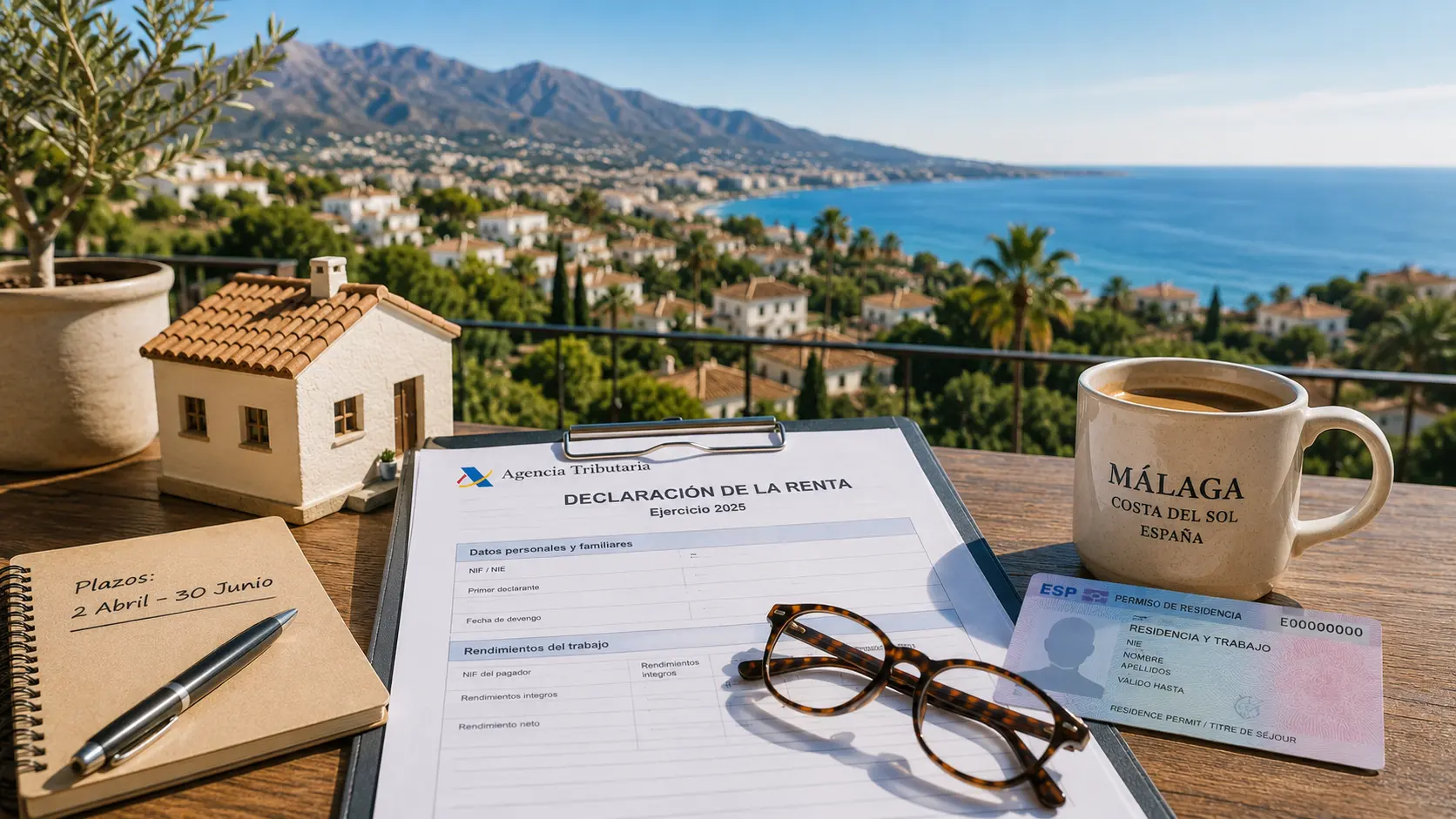
For many international buyers on the Costa del Sol, purchasing a home in Spain is the exciting part. The keys are collected, the removals arrive, the terrace furniture is chosen and life in Andalucía begins.
Then spring arrives and suddenly there is another milestone to deal with: your first Spanish tax declaration as a property owner.
Every year between April and the end of June, Spain’s annual income tax campaign — the Declaración de la Renta — requires residents to declare their income, assets and certain property-related information from the previous calendar year. If you purchased a property in Málaga province during 2025, this is the period when that purchase generally needs to be reflected correctly in your tax return.
For many foreign buyers, particularly those relocating permanently to Benahavís, Marbella or Estepona, this comes as a surprise. Some assume a property only matters for tax purposes once it generates rental income. Others believe a home they simply live in does not need to appear on their declaration at all.
In reality, Spanish property ownership creates reporting obligations in several different ways depending on how the property is used and whether you are considered tax resident in Spain.
Why Your Property Tax Declaration in Spain Matters
Spain’s tax system places significant emphasis on property ownership. When you buy a home, the Spanish Tax Agency expects the property to be incorporated into your tax profile, even if it is your main residence and produces no income whatsoever.
If you are tax resident in Spain — generally meaning you spend more than 183 days per year in the country or have your main economic centre here — your annual tax declaration should include details of the property purchase.
This typically includes the cadastral reference number, purchase date, ownership percentage and whether the property is used as your habitual residence, a second home or a rental investment.
Official guidance and filing information can also be found directly through the Spanish Tax Agency, although many international buyers still prefer to work with a gestor or accountant familiar with Andalucía’s regional tax rules.
For new arrivals to Andalucía, this first declaration often feels more complex than expected because the property itself can influence several areas of taxation at once.
The Difference Between a Main Home, Holiday Home and Rental Property
One of the most important distinctions in Spain’s tax system is how the property is used.
If the property is your permanent home in Málaga province, the declaration process is relatively straightforward. You are primarily informing the authorities that the property is now your habitual residence.
However, if the property is a second home that is not rented out, Spain applies something many international buyers have never encountered before: imputed income tax.
Essentially, the Spanish authorities assume the property has an economic value simply because it could theoretically be rented. Even if the home sits empty for most of the year, owners may still have to declare a notional taxable amount based on the cadastral value.
Second-home owners should also understand the wider taxes and costs of owning property in Spain, particularly if the property is only used for holidays or occasional stays.
This catches many Costa del Sol second-home owners off guard during their first tax season.
Meanwhile, owners renting out properties in Marbella, Benahavís or elsewhere in Andalucía face additional reporting obligations because rental income must also be declared.

Why This Year’s Declaration Is Particularly Important
The first tax return after buying a property is often the most important one to get right.
This is because the information entered now can affect future tax calculations, including capital gains tax when the property is eventually sold.
Purchase costs connected to the acquisition may also become relevant later. Expenses such as notary fees, registry charges, legal fees and certain mortgage costs are not always immediately deductible, but they can often form part of the acquisition value used in future tax calculations.
Many of the expenses connected to buying a property in Andalucía can later become relevant for tax purposes. Our guide to the cost of buying property in Spain explains the main taxes and purchase costs buyers should understand from the outset.
For many overseas buyers, the first property tax declaration in Spain is also the moment they realise how differently Spanish property taxation works compared with their home country.
For owners of investment properties, correctly categorising deductible expenses from the beginning is equally important.
In Andalucía, landlords may potentially offset qualifying costs including community fees, insurance, repairs, mortgage interest and local taxes against rental income, depending on their residency status and the nature of the rental.
Holiday rentals have additional considerations because properties advertised for tourist accommodation may also require compliance with Andalucía’s tourism regulations and licensing requirements.
Regional Rules in Andalucía Can Make a Difference
Many property owners do not realise that some tax rules and deductions vary between Spain’s autonomous communities.
Andalucía has introduced several tax reductions and incentives in recent years aimed at attracting residents and investment to the region. Depending on your circumstances, there may be regional deductions linked to factors such as age, energy-efficiency works, disability adaptations or family status.
However, eligibility rules can be highly specific and change regularly.
This is one reason why buyers who have recently moved to Málaga province are often advised not to rely entirely on generic online tax guides. A rule that applies in Madrid, Valencia or Catalonia may not operate in exactly the same way in Andalucía.
Non-Residents Face Different Filing Obligations
Some Costa del Sol homeowners assume they do not need to worry about Spanish declarations because they remain tax resident elsewhere.
However, non-resident owners usually still have Spanish filing obligations connected to the property.
Even owners who never rent their home may still need to file a non-resident tax return relating to imputed income. If the property is rented out, the reporting requirements become more extensive.
Since Brexit, this area has become even more important for British buyers because some tax treatment differs between EU and non-EU residents.
For buyers relocating permanently, residency status can significantly affect how property ownership is taxed. Our guide to visas and residency in Spain explains some of the wider considerations for new residents in Andalucía.
For many international owners, this is where professional guidance becomes invaluable.

Property Tax Declaration in Spain: Common First-Year Errors
Every year, tax advisers on the Costa del Sol see similar issues repeated by new buyers.
Some owners fail to declare the property entirely because they believe it produced no income. Others incorrectly categorise a holiday home as a primary residence. Many forget to retain invoices and purchase documentation that could become valuable years later when calculating capital gains tax.
Another common mistake is assuming that filing taxes in another country removes the obligation to file in Spain.
In practice, Spanish property ownership often creates Spanish reporting obligations regardless of where the owner originally comes from.
Why Speaking to a Professional Is Worthwhile
Spanish taxation is notoriously detailed and the interaction between national and Andalusian regional rules can be difficult to navigate without advice tailored to your circumstances.
The correct treatment depends not only on the property itself, but also on your residency status, income sources, ownership structure and whether the property is used personally, rented long-term or operated as a holiday rental.
For many buyers in Benahavís and the wider Costa del Sol, working with a qualified gestor or tax adviser during the first post-purchase tax season can prevent expensive mistakes later.
It can also provide peace of mind that the property has been declared correctly from the outset.
Have a Question About Benahavís?
Darren & Angelina — your Personal Property Concierge — can help with property, relocation, lifestyle and area questions across Benahavís. Send us a short message and we’ll point you in the right direction.
Related Reading
Taxes and Costs of Owning Property in Spain
Understand the annual ownership costs that may apply after buying, including local taxes, non-resident obligations and running costs.
Cost of Buying Property in Spain
A clear guide to the taxes, legal fees and completion costs buyers should allow for when purchasing a home in Andalucía.
Visas and Residency in Spain
Explore the main residency routes and practical considerations for international buyers planning to spend more time in Spain.
Disclaimer
This article is provided for general informational purposes only and does not constitute legal, financial or tax advice. Spanish and Andalusian tax laws can change frequently and individual circumstances vary significantly. Before making decisions relating to taxation, residency or property ownership in Spain, you should consult a qualified Spanish tax adviser, accountant or legal professional familiar with your personal situation.
Looking for a home outside Benahavís?
Holiday Homes Spain
covers the whole Costa del Sol.