Choosing a School in Spain: Public, Concertado or Private?
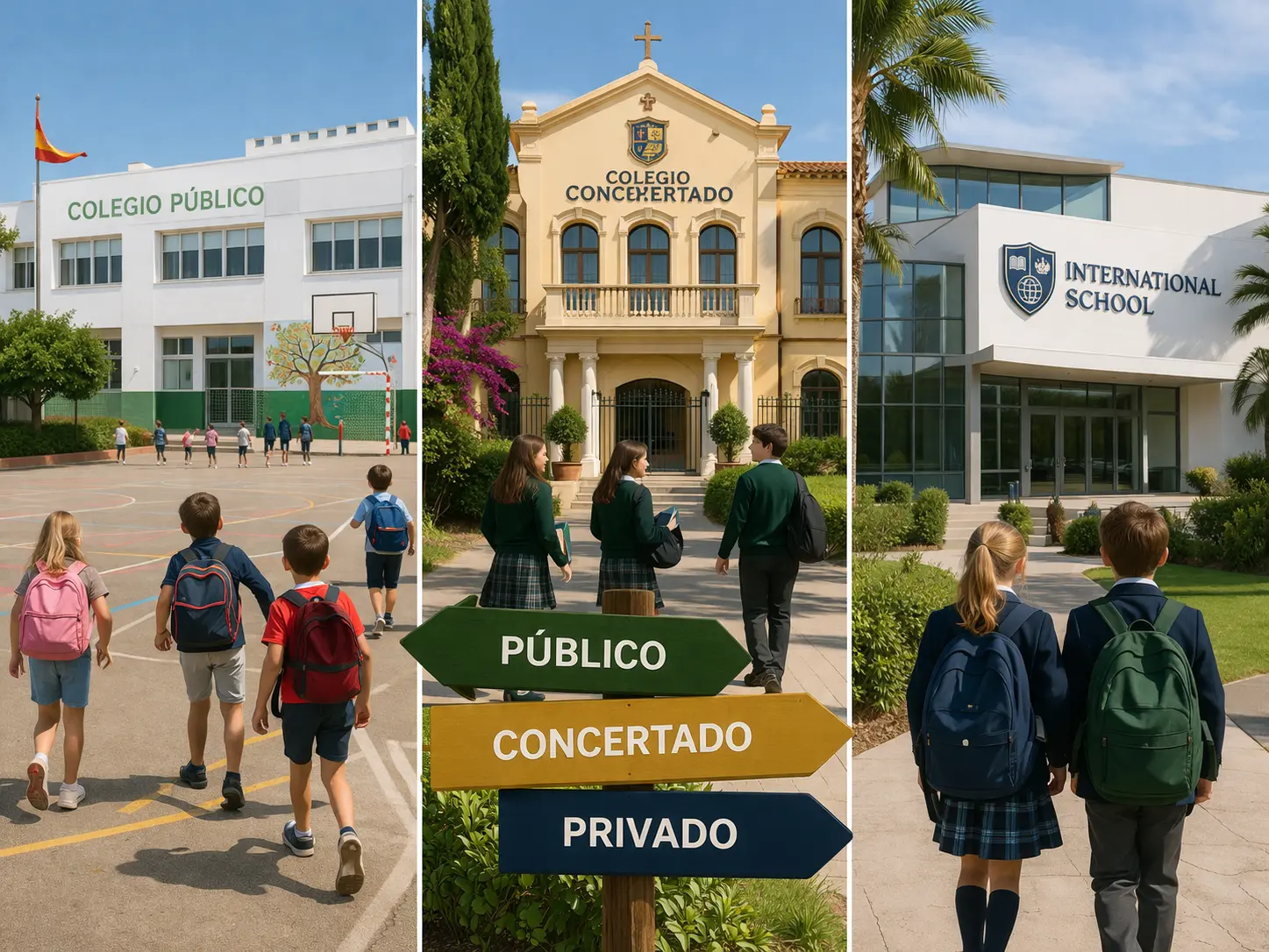
If you are moving to Spain with children, choosing the right school is one of the most important decisions you will make. It is not simply about education — it shapes your child’s social life, language development and long-term integration into Spanish life.
Spain offers three main types of schooling: public schools, concertados and private schools. At first glance, the system can feel unfamiliar — particularly for families arriving from the UK or other international markets — but understanding how each option works makes the decision far clearer.
This guide explains the key differences, costs and considerations, helping you choose the path that best aligns with your child and your family’s lifestyle in Spain.
Understanding the Three School Types
Public schools in Spain are state-run and free of charge. For many international families, this can initially be confusing — particularly those from the UK, where “public schools” are in fact private, fee-paying institutions.
Concertado schools sit somewhere in between. These are privately owned schools that receive government funding, allowing them to offer lower fees while still maintaining some independence. The Royal Spanish Academy defines them as privately owned centres operating under agreement with the public administration.
Fees for concertado schools are relatively modest, typically ranging between €680 and €860 per year. However, it is worth noting that some families report additional or indirect costs beyond the official figures.
Private schools, including international schools, operate independently with full control over curriculum, language and structure — and naturally, come at a higher cost.
Curriculum & Teaching Approach
Public education in Spain follows a standardised national curriculum, designed to provide consistency and ensure that all students receive a balanced and neutral education.
Concertado schools, by contrast, have greater flexibility. While still aligned with national standards, they are able to introduce their own teaching approaches, priorities and — in some cases — values or religious elements.
This flexibility can be seen from two perspectives. On one hand, public schools promote equality, diversity and social cohesion. On the other, concertados often provide a more tailored and personalised learning environment, which can benefit children who require additional support or a different style of teaching.
Some concertado schools are also religious (most commonly Catholic), making them a natural choice for families seeking that particular educational foundation.
Class Sizes & Individual Attention
Class size is one of the most noticeable differences between school types.
Public schools typically have larger classes, which can limit the level of individual attention each student receives. Concertado and private schools generally operate with smaller class sizes, allowing teachers to dedicate more time to each child — something many families prioritise, particularly during key development years.
Facilities & Resources
Facilities can vary significantly across the system. Public schools depend largely on government funding, meaning infrastructure and resources may differ depending on location and investment cycles.
Concertado and private schools, supported by additional funding, often provide enhanced facilities — including modern classrooms, sports infrastructure, and broader extracurricular programmes.
Academic Performance & Outcomes
Academic performance can also vary. On average, students in concertado and private schools tend to achieve higher exam results and lower repetition rates.
Recent data suggests that around 9.2% of students in public schools repeat a year, compared to approximately 4.3% in concertado and private schools.
However, these figures are influenced by a range of factors, including socioeconomic background, available resources and teaching methodologies — and should always be considered within a broader context.
Private & International Schools
Private schools, particularly international schools, offer the highest level of flexibility. Fees typically range between €6,000 and €12,000 per year, although premium schools can exceed €20,000–€30,000 annually.
These schools may follow British, American, French or other international curricula, allowing children to continue education in their native language and maintain pathways to universities abroad.
This can be a significant advantage for families planning a temporary relocation. However, it may also slow integration into Spanish life, particularly in terms of language and local friendships.
Private schools often offer excellent facilities, highly qualified teaching staff and, in some cases, selective entry requirements.
Which Option Is Right for Your Family?
There is no single “best” option — only the one that fits your child, your priorities and your long-term plans in Spain.
Some families prioritise integration, language and community, making public schools an excellent choice. Others prefer the balance of cost and personalisation offered by concertados. Meanwhile, international families often choose private schools for continuity and familiarity.
Ultimately, the decision will depend on how your child learns, the environment in which they thrive, your budget, and how long you intend to stay in Spain.
As with many aspects of relocating, taking the time to visit schools, speak to other parents and understand daily routines will give you the clearest picture — and the confidence to make the right choice.