Understanding Hay Fever in Benahavís
There is a particular quality to the air in Benahavís at certain times of year. It feels softer, warmer and more alive. The hills deepen into layers of green, golf fairways appear almost luminous against the mountains, and the scent of wild herbs carries gently through the breeze. It is the kind of environment people move here for — a place where nature is not just present, but defining.
And yet, for many, this same air carries something unseen.
Pollen.
Not a single moment or season, but a quiet, shifting presence that follows the natural rhythm of the landscape itself. In a setting as green and varied as Benahavís, hay fever is rarely confined to one short window in spring. Instead, it tends to unfold in phases, shaped by the mountains, the valleys, the golf courses, the wooded slopes and the cultivated gardens that make this part of the Costa del Sol so distinctive.
A Landscape That Breathes
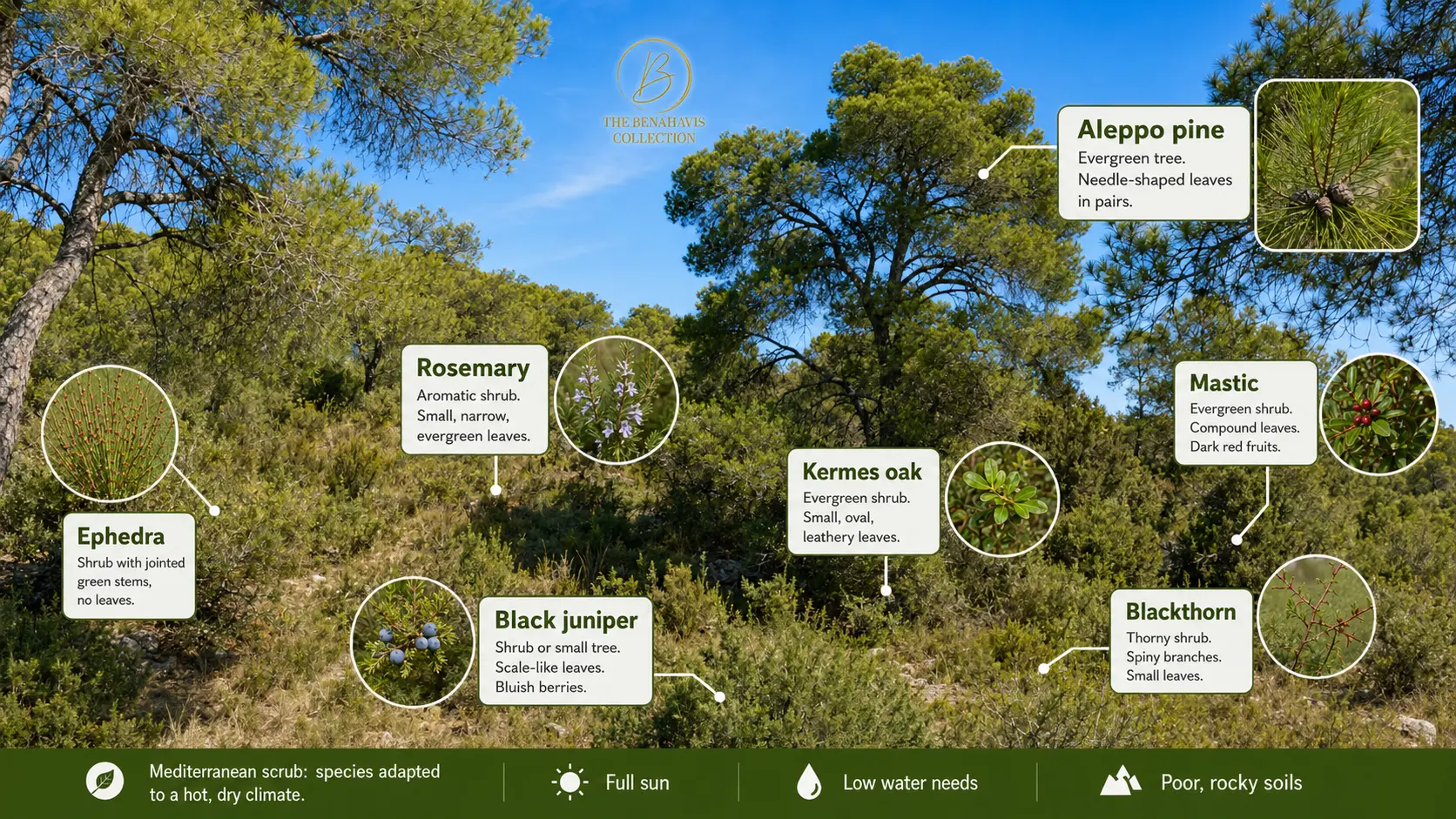
To understand hay fever in Benahavís, it helps to understand the setting. This is not a tightly urban environment where greenery is decorative and contained. It is a layered Mediterranean landscape shaped by altitude, open exposure, woodland, ornamental planting and irrigated green space. Olive trees, cork oak, pine, cypress and wild grasses all play a role in the local environment, while golf courses keep large areas of turf actively growing through much of the year. That richness is one of the area’s great luxuries. It is part of what gives Benahavís its sense of calm, beauty and connection to nature, much like the wider outdoor lifestyle explored in our guide to outdoor and wellness living in Benahavís.
However, it also means that pollen is part of daily life for longer than many newcomers expect. Rather than a single hay fever season, there is a sequence of overlapping periods in which different plants release pollen at different times, sometimes gently and sometimes in waves.
The First Signs of Hay Fever in Benahavís
In much of northern Europe, winter offers a pause from airborne allergens. In southern Spain, and especially in a green inland setting such as Benahavís, the story often begins much earlier. By January and February, some trees are already active. Cypress is one of the earliest and most important triggers, particularly because it is widely used in Mediterranean landscaping and releases fine pollen that travels easily on the wind.
At this stage, symptoms can feel deceptively mild. A little nasal irritation, slightly itchy eyes, a sense of congestion or fatigue that seems almost seasonal rather than allergic. Yet for many people, this is the beginning of the annual cycle. As late winter moves into early spring, additional trees come into play, including pine, oak and, in the wider Andalusian landscape, the first stages of olive pollen season.
Because Benahavís sits between mountain scenery and the coast, with changing air movement across the valleys, pollen can drift and accumulate in ways that are not always obvious. Even on otherwise beautiful days, clear skies and a light breeze can coincide with rising exposure.
Spring and the Peak Pollen Season
Spring is when the landscape feels at its most vibrant, and it is also the time when hay fever symptoms tend to become most noticeable. This is not due to one single source, but because several pollen types begin to overlap. Tree pollen may still be present, while grasses start to intensify across the countryside, roadside verges and the fairways that characterise so many residential areas around Benahavís.
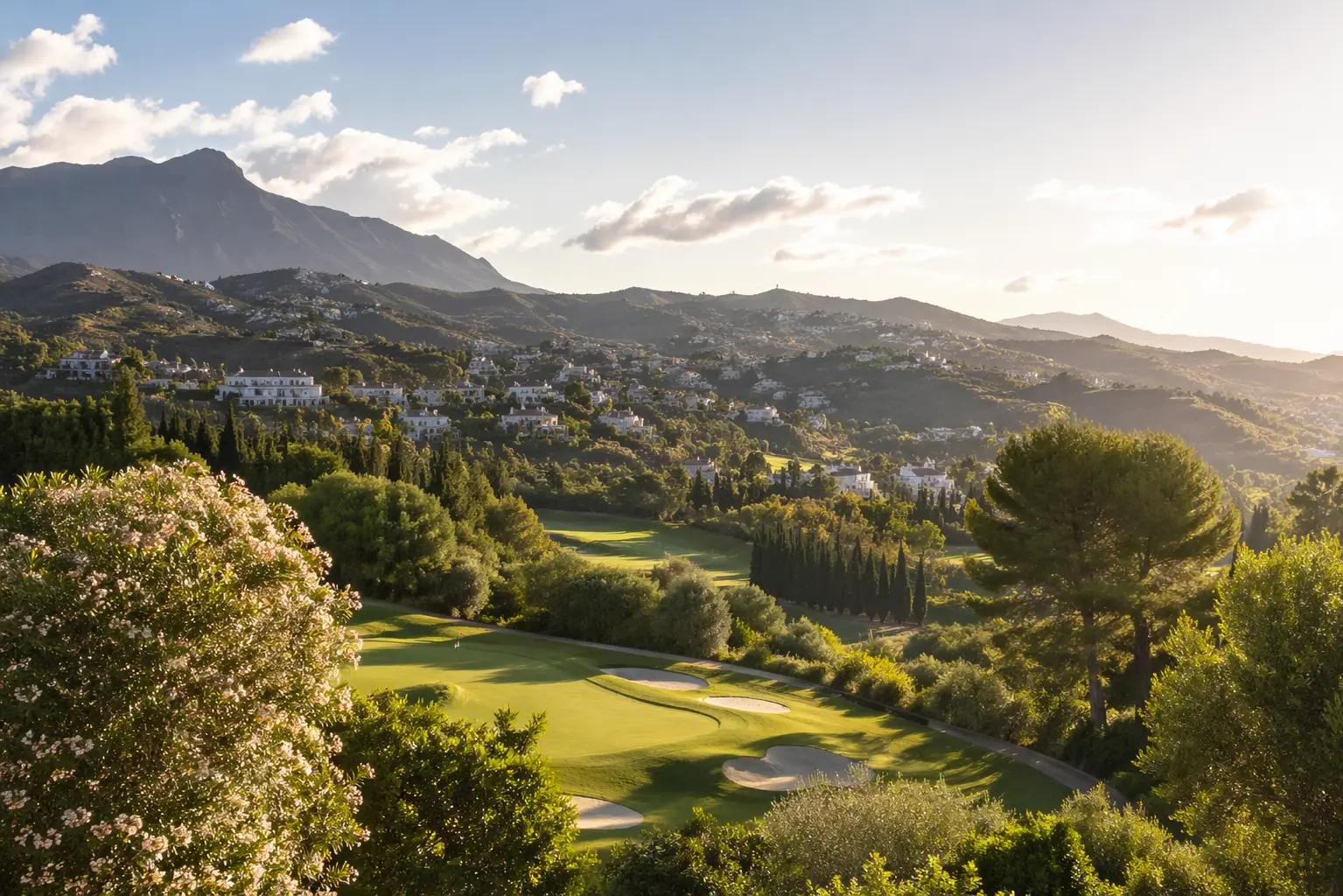
Grass pollen is often one of the most significant causes of seasonal allergies because it is both widespread and highly mobile. In this area, it can be found not only in open rural land but also in the carefully maintained green settings associated with golf living. For residents and visitors who enjoy an outdoor lifestyle, this can create an interesting contradiction: the same lush scenery that makes the area so attractive can also heighten allergy symptoms during the most active months. It is one of the reasons Benahavís remains so closely associated with greenery, fairways and mountain scenery, themes that also run through our feature on golf in Benahavís.
At roughly the same time, olive pollen becomes a major feature of the wider Andalusian season. Olive trees are deeply woven into the identity of southern Spain, and their flowering period can have a marked effect on people who are sensitive to airborne allergens. Even when olive groves are not directly outside the front door, pollen can travel over considerable distances, especially during warm, dry and breezy conditions.
In spring 2026, pollen monitoring stations across Málaga province recorded olive pollen concentrations reaching particularly high levels, with specialists warning that warm temperatures following a wetter-than-usual winter had intensified flowering across Andalucía. Grass pollen levels were also beginning to rise at the same time, creating the kind of overlapping exposure that many allergy sufferers find especially difficult.
Weather patterns play an important role too. Warm inland winds can carry pollen across valleys and foothills surrounding Benahavís, meaning exposure is not always directly linked to the immediate surroundings of a property or neighbourhood. On some days, the air may feel beautifully clear and dry while pollen concentrations quietly rise in the background.
The result is that spring in Benahavís often feels cumulative from an allergy perspective. It is not simply that one season starts and ends. Rather, one trigger blends into another, creating a longer and sometimes more intense experience than people anticipate.
Why Pollen Seasons Overlap
One of the main reasons hay fever can feel so persistent here is that the seasons do not divide neatly. The Mediterranean climate encourages early flowering, while varied elevations and sustained warmth allow different species to mature on slightly different timelines. Some trees release pollen before spring has fully arrived. Grasses then build as temperatures rise. Later in the year, weeds and smaller dry-climate plants can continue the pattern into autumn.
Weekly pollen monitoring carried out by the University of Málaga helps track how different pollen types move through the province during spring and early summer. Their observations consistently show that olive and grass pollens dominate the late spring season across much of inland Málaga province, including the greener residential areas surrounding Benahavís.
This is why many people describe hay fever less as a single episode and more as a drawn-out season of fluctuating intensity. There may be a clear peak in spring, but it often sits within a broader period that begins earlier and ends later than expected. In Benahavís, where greenery is part of the lifestyle and not simply an occasional backdrop, that pattern feels especially relevant.
Summer Relief — Or Simply a Change?
By early summer, the visual character of the landscape begins to shift. The intense freshness of spring softens into the warmer tones of the Mediterranean dry season. This can bring relief for some sufferers, particularly if grass pollen starts to decline. However, summer does not necessarily bring a clean ending. In areas where lawns and fairways are irrigated, certain grasses may remain active longer than they would in untreated countryside. Meanwhile, other plants adapted to heat and dryness begin to contribute their own pollen to the atmosphere.
For some people, symptoms become milder and more manageable during this period. For others, particularly those who react to multiple pollen types, the sense of irritation simply changes in character rather than disappearing. It may be less dramatic than spring, but still present enough to affect energy levels, sleep or comfort outdoors.
Autumn and the Lingering Season
Autumn is often overlooked when people talk about hay fever, yet it can play a meaningful role in southern Spain. Certain weeds and late-season plants release pollen as temperatures ease and the landscape transitions again. These are not always the plants people notice visually, but they can still prolong the season, particularly after occasional rainfall encourages renewed growth in open ground.
In practical terms, this means that some residents feel as though hay fever in Benahavís never quite switches off. Instead, it tapers, pauses and returns in different forms. That continuity can be surprising at first, but it becomes easier to manage once the yearly rhythm is understood.
Common Hay Fever Symptoms
Hay fever symptoms are often described too simply, as though they begin and end with sneezing. In reality, the experience can be broader and more draining than that. Watery or itchy eyes are common, as is nasal congestion, but many people also notice subtle fatigue, a sense of heaviness in the head, poor sleep and difficulty concentrating. During periods of high pollen, the body is effectively responding to the environment as though it were under attack, which is why symptoms can feel persistent rather than momentary.
For those with asthma or a tendency towards chest sensitivity, pollen can also aggravate breathing, especially when warm weather, outdoor activity and high exposure combine. In a place where life is naturally lived outdoors for much of the year, that can have a real effect on day-to-day comfort.
One reason symptoms sometimes feel unexpectedly severe is that pollen counts are only part of the picture. Air quality, dust particles, humidity and individual sensitivity all influence how the body reacts. Two people can experience the same conditions very differently, and even the same person may notice symptoms changing considerably from one year to another.
What Causes the Reaction
Hay fever is caused by the immune system overreacting to pollen particles that are, in themselves, harmless. The body identifies them as a threat and releases histamine and other chemicals, producing the familiar symptoms of allergic rhinitis. Wind-pollinated plants tend to be the most significant because their pollen is light, abundant and easily dispersed across large areas. That is why trees, grasses and certain weeds are the main contributors, rather than flowering plants that rely on insects and carry heavier pollen. For readers who want a broader medical overview, hay fever and antihistamines are explained clearly in these background resources.
In Benahavís, the combination of natural vegetation, managed landscaping and open terrain creates an environment in which those particles circulate with ease. It is not one plant, one hill or one garden, but a broad ecological mix that shapes the overall exposure level.
Relief, Management and Living Well Outdoors
The good news is that hay fever can usually be managed well, especially once the timing of local pollen patterns becomes familiar. Relief often begins with awareness. Knowing that symptoms may start in winter, intensify through spring and continue in softer form into autumn helps people make sense of what their bodies are doing and why.
Some choose over-the-counter antihistamines during active periods, while others rely on nasal sprays or medicated eye drops to control inflammation more directly. For people with stronger or more persistent symptoms, allergy testing can identify specific triggers and open the door to longer-term treatment such as immunotherapy.
Alongside medical support, many people find that small practical habits help considerably. Showering after long walks, changing clothes after gardening, and being mindful of ventilation during high-pollen days can reduce how much pollen is brought indoors. Timing also matters. On certain days, especially when it is dry and breezy, pollen exposure may be higher even if the weather itself feels ideal.
During periods of particularly high pollen — especially during olive flowering season in late spring — many residents also adapt small daily routines. Keeping windows closed during windy afternoons, wearing sunglasses while outdoors, avoiding strenuous exercise near dry grassland during peak pollen hours and showering after walks can all help reduce exposure indoors. Some people also find lightweight face masks surprisingly effective during the most intense days of the season.
None of this means retreating from the lifestyle. Rather, it is about adapting intelligently to it. In a setting like Benahavís, where terraces, golf, walking routes and mountain views form such a large part of everyday life, the aim is not avoidance, but ease.
The Seasons of Benahavís, Seen More Clearly
Ultimately, pollen is part of the same story as everything else that defines Benahavís. The olive trees, the green valleys, the mountain air, the golf landscapes and the year-round greenery are not separate from hay fever; they are the reason it exists in the form it does. The beauty of the environment and the rhythm of pollen belong to the same natural cycle.
The 2026 season has also been a reminder of how closely Benahavís remains connected to the wider natural rhythms of Andalucía. After a wetter winter and an unusually green spring, pollen levels across Málaga province have risen earlier and more intensely than many residents expected.
Seen that way, hay fever becomes less of a mystery and more of a pattern. Winter brings the earliest tree pollen. Spring delivers the strongest overlap of trees, grasses and olive blossom. Summer may offer relief for some, while still sustaining exposure in greener, irrigated areas. Autumn lingers quietly in the background before the cycle begins again.
Understanding that rhythm makes it easier to live well here. It allows people to anticipate rather than simply react, and to enjoy the landscape with a little more awareness of what the air is carrying from one season to the next.
Related Reading
Outdoor & Wellness in Benahavís
A wider guide to walking, nature, fresh air and active outdoor living across the Benahavís area.
Best Walks in Benahavís
Explore the river trails, mountain paths and local walking routes that shape daily life outdoors.
Golf Courses Near Benahavís
Understand the green golf landscapes that help define the area’s year-round outdoor lifestyle.
Have a Question About Living in Benahavís?
Darren & Angelina — your Personal Property Concierge — can help with property, relocation, lifestyle and area questions across Benahavís. Send us a short message and we’ll point you in the right direction.
Looking for a home outside Benahavís?
Holiday Homes Spain
covers the whole Costa del Sol.