Who Is Responsible for Water Damage in Community Properties?
Following the recent heavy rains across the Costa del Sol, many owners have reported leaks, damp patches, and water damage. This article explains — in plain English — who is responsible for repairs and insurance claims in community properties under Spanish Horizontal Property Law.
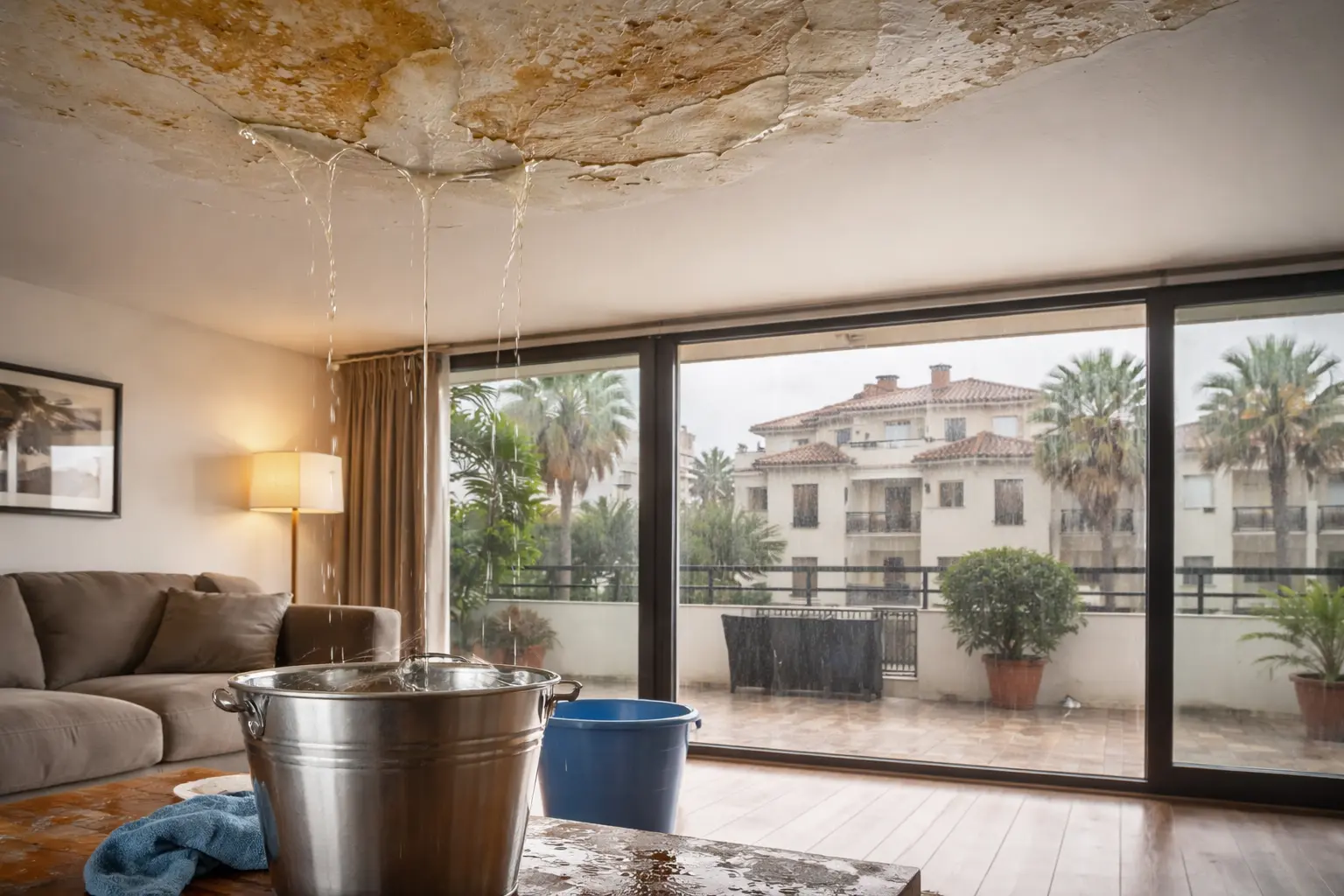
Periods of intense rainfall often expose weaknesses in buildings, particularly in apartment communities. When water damage appears, it’s natural for owners to ask the same questions: Who is responsible? Which insurance applies? And what should I report?
The answers depend on where the problem originates. Spanish Horizontal Property Law clearly distinguishes between common elements and private elements, and responsibility flows from that distinction.
1. Damage Originating from Common Elements
The following are generally considered common elements within a community:
- Roofs and roof coverings
- Façades
- Structural elements (slabs, columns, load-bearing walls)
- Main drainage stacks and general pipework
- Terraces that form part of the building’s roof structure, even if for private use
If the source of the water damage comes from a common element, the Community of Owners is responsible for repairing the cause.
In these cases, the community insurance policy will normally cover the resulting damage inside the affected apartment, subject to the terms and limits of the policy.
2. Damage Originating from Private Elements
The following are generally considered private elements:
- Bathrooms and kitchens
- Internal water, drainage, and electrical installations
- Pipes running exclusively within an apartment
- Flooring, tiling, and interior finishes
If water damage originates from a private element — for example, a leaking internal pipe or a bathroom issue — the responsibility lies with the owner of that apartment, even if the damage affects a neighbouring property.
The same applies to terraces for private use. If a terrace has not been properly maintained and a leak occurs due to deteriorated seals, defective joints, or blocked drains, responsibility rests with the owner of that property.
3. Notifying the Insurance Companies
In all cases involving leaks or water damage, it is essential to:
- Notify the private insurance of the affected apartment
- Inform the Community Administration
This allows the incident to be passed to the community insurer where appropriate. Both insurance companies will then assess the origin of the damage and determine responsibility.
Only once the origin has been formally established can it be confirmed who must carry out the repairs and who must bear the costs.
4. Damp Stains, Condensation, and Ventilation
Owners are encouraged to report serious and clearly identifiable water leaks. In many cases, small damp marks or condensation do not result from structural leaks but from insufficient ventilation inside the property.
Condensation-related issues are usually not covered by insurance policies and do not constitute an insured event.
For this reason, it’s important to distinguish between genuine water ingress and minor humidity issues, and to report only significant leaks or damage that clearly point to a structural or plumbing problem.
Why This Clarity Matters
Understanding how responsibility is allocated helps avoid misunderstandings between owners, the community, and insurers — particularly after periods of exceptional weather.
Clear communication and correct reporting ensure repairs are handled efficiently, insurance claims are processed correctly, and unnecessary disputes are avoided.
Got Questions?
We would be happy to answer these, or put you in contact with someone who can help if we cannot ourselves. You can drop us a message via the buttons on the right.