How Much Does It Cost to Build a Villa on the Costa del Sol?
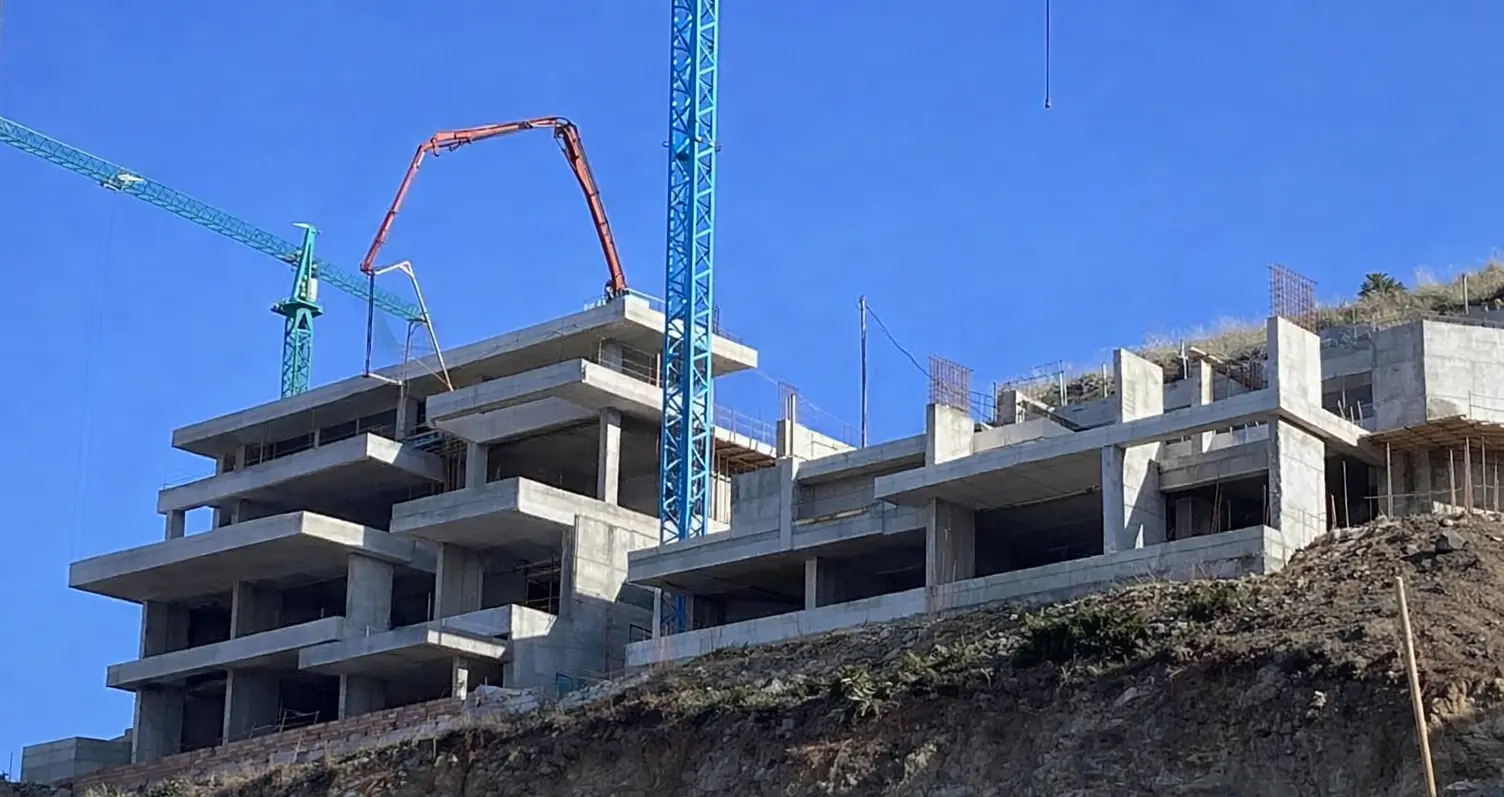
If you’re looking at building plots in areas like La Zagaleta, Marbella Club Golf Resort, Monte Mayor or Real de La Quinta, you’ll quickly discover a simple truth: the plot is only the starting point.
The build cost itself can be surprisingly variable — not because builders are vague, but because “a villa” can mean anything from a straightforward Mediterranean home to a highly engineered, glass-heavy, basement-rich modern statement with lifts, wellness areas and complex retaining walls.
This guide breaks down the real-world numbers buyers need: a realistic cost-per-m² range, the “hidden” soft costs (architects, licences, engineers), and a practical way to budget so you don’t get caught by unpleasant surprises mid-project.
1) The headline number: build cost per m²
As a broad benchmark for coastal Spain, reputable market commentary commonly places construction cost ranges around €1,500–€3,000 per m², depending on quality, location and complexity. That’s a useful starting point, but it’s only the start.
On the Costa del Sol (and especially in the Benahavís/Marbella prime belt), many “dream villa” builds sit toward the upper end because of: hillside sites, sea-view orientation, large basements, high-spec glazing, bespoke stonework, smart-home systems, and landscaping that’s designed like a boutique hotel.
Architectural studios focused on Marbella luxury often quote luxury builds in the €1,400–€2,500+/m² range depending on specification and complexity.
A practical buyer-friendly way to think about it:
- Good quality villa: often starts around €2,000/m²+ (and can rise quickly with specification).
- Contemporary prime/luxury villa: commonly budgets at €2,500–€3,500/m²+
- Architectural “statement” villa: €4,000/m²+ is not unusual once complexity and premium finishes stack up
Important detail: people often quote cost per m² using “built area”, but your lifestyle features (pool, terraces, landscaping, retaining walls, access roads) can add very significant budget outside that simple number.
2) The costs buyers forget: “soft costs” and professional fees
In Spain, building a villa is a regulated process. You don’t just hire a contractor; you assemble a professional team and work through licensing. Your soft costs will vary, but it’s common for them to land in the 10–20%+ range of build cost depending on what’s included.
Typical items include:
- Architect (proyecto + design leadership)
- Architect Técnico / Quantity Surveyor (dirección de ejecución) — a formal role in Spanish builds
- Geotechnical study (critical on hillside plots)
- Topographical survey (site boundaries, levels, access)
- Structural engineer (often integrated via the architect)
- Health & Safety coordination (required)
- OCT / quality control + decennial insurance (typically required for certain builds/sales scenarios)
You’ll also see administrative “visado” (professional validation/filing) costs via local professional colleges as part of the process.
3) Licences, taxes and municipal charges
Every municipality has its own process and fee structure, but in general you should expect a combination of: urban planning/works licence fees and the municipal construction tax called ICIO.
For context, Marbella’s own information pages explain that urban licence fees and ICIO are handled through municipal tax management procedures (and you’ll receive a payment document as part of the process).
As a rule of thumb, many buyers budget municipal costs as a percentage of the official construction budget (often referred to as PEM). A commonly cited example for Marbella is ICIO at 4% of PEM plus an additional urban services/processing fee that can be around the low single digits. (Always confirm with the relevant town hall for your plot.)
If you’re building in Benahavís municipality, you’ll also follow the town hall’s “obra mayor” (major works) licence requirements and documentation process.
4) VAT: don’t guess — it depends on the type of work
VAT treatment trips people up. The Spanish Tax Agency explains that, as a general rule, works are taxed at the standard rate, with a reduced rate applying in specific scenarios — including certain construction/rehabilitation works on buildings intended mainly for housing.
In practice, your VAT position depends on the structure of the project, who contracts whom, and the precise classification of the works. This is one of the areas where a good architect/gestor and an independent lawyer save real money, because “small misunderstandings” here become expensive.
5) The real budget structure: a simple way to avoid surprises
When buyers run into trouble, it’s often because they budget only the “build” and forget the rest. A more reliable framework is:
- A) Construction (the building itself) — your €/m² number
- B) Site & external works — excavation, retaining walls, access roads, drainage, gardens
- C) Professional team — architect, técnico, surveys, studies
- D) Licensing & municipal taxes — licence fees + ICIO
- E) Fit-out & lifestyle extras — kitchens, wardrobes, lighting, home automation, spa/gym, cinema
- F) Furniture & styling — optional, but common in this market
- G) Contingency — the most underestimated line
If you want one strong rule: keep a 10–15% contingency for a straightforward build and consider 15–20%+ for complex hillside or basement-heavy designs.
On steep plots, the unknowns are usually ground conditions, retaining requirements and service routing — not the tiles.
6) Timeline: how long does it actually take?
Buyers often assume “one year.” In reality, many villa builds take longer because the timeline includes two phases: pre-construction (design + licensing) and construction (build + completion paperwork).
A sensible expectation for a custom villa is often:
- Design + permitting: several months (sometimes longer, depending on municipality and complexity)
- Construction: commonly 12–18 months for a substantial villa; complex projects can extend beyond that
The best way to protect timeline is to do the “boring” work early: full surveys, clear scope, realistic specification, and a contract structure that matches the build style (fixed price vs managed build).
7) Buying a finished villa vs building: when does building make sense?
Building makes the most sense when you care deeply about the end result — layout, orientation, privacy, sustainability, smart-home, wellness features — and you’re prepared to manage time and decision-making.
Buying an existing villa often wins on speed and certainty. Building wins on personalisation — and sometimes on value, if you secure an exceptional plot and execute the project well.
In prime areas where plots are scarce, a well-designed new build can stand out strongly in the resale market.
8) A quick “starter budget” example
Let’s keep this simple and realistic. Imagine a 400 m² contemporary villa (plus terraces/pool/landscaping) on a hillside plot:
If construction is budgeted in a prime range (say €2,500–€3,500/m²), the building cost alone is roughly €1.0M–€1.4M before you add: external works, professional fees, municipal charges, interior fit-out upgrades, and contingency.
That’s why two “similar size” villas can end up with very different total project budgets — the plot and the specification drive the outcome.
9) Our practical advice (the short version)
- Do a proper feasibility review before you fall in love with a plot.
- Budget external works early — especially on hillside sites.
- Get clarity on licensing steps with the correct municipality (Marbella vs Benahavís vs Estepona matters).
- Don’t treat VAT and municipal charges as “minor lines”. Confirm them properly.
- Protect yourself with scope clarity, staged payments, and a realistic contingency.
If you’re considering a building plot in La Zagaleta, Marbella Club Golf Resort, Monte Mayor or Real de La Quinta, tell us what you want to build (style, size, features, timeline) and we’ll help you sanity-check the numbers and the feasibility before you commit.
Alternatively, you can view some of the residential plots we currently have for sale here →