The Benahavís Equation
Scarcity, style and sustainable value — what really supports prices and liquidity in the Benahavís property market.
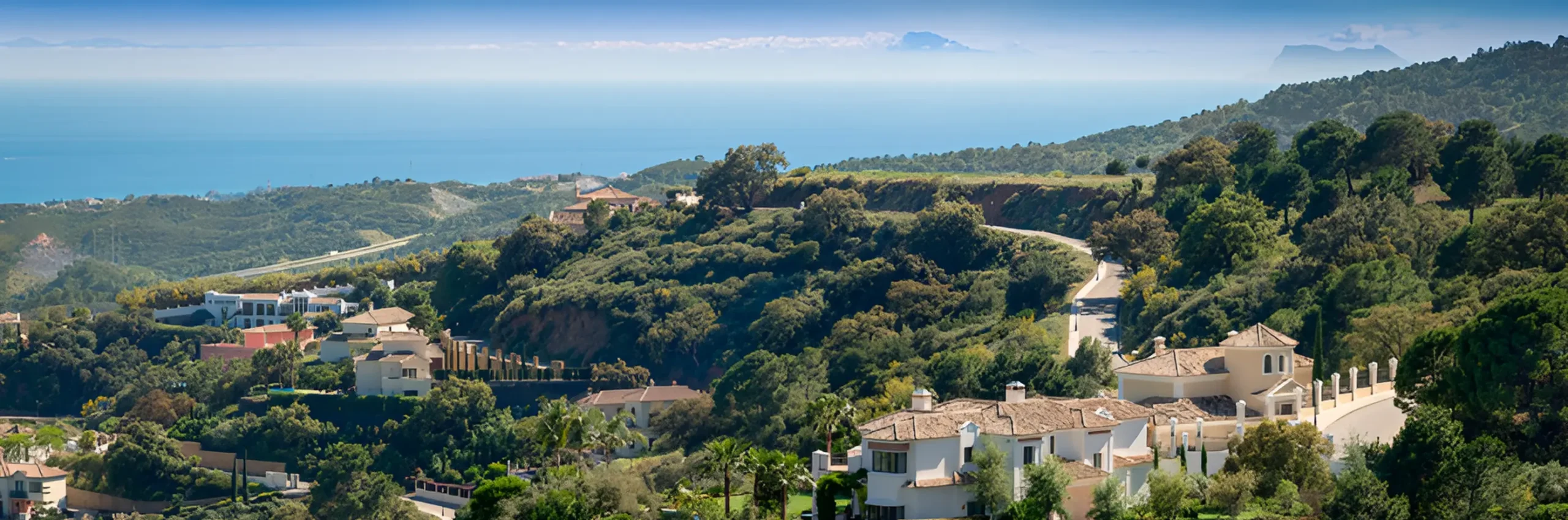
Benahavís is often described as the jewel of the Costa del Sol’s “Golden Triangle” — a hillside municipality where Marbella prestige meets Andalusian calm. It attracts international buyers who want privacy, views and a quieter pace, yet still want the coast within easy reach.
However, the best way to understand Benahavís is not through headlines alone. Resale strength here comes from a few specific forces — and when you understand them, pricing, liquidity and timing become much easier to read.
Below is a practical framework we use when advising buyers and sellers: scarcity, quality, buyer demand and the features that protect value over time.
Scarcity as a Safeguard
Benahavís has limited developable land, and planning control tends to be tighter than in many coastal zones. Large parts of the municipality are shaped by hillsides, golf valleys, protected natural settings and low-density residential areas. That naturally constrains supply — particularly for well-located homes with privacy, views and easy access to Marbella, San Pedro or Puerto Banús.
In practice, the lack of “endless new phases” is one of the quiet reasons values hold up across cycles. The market can slow, but prime homes remain prime when genuine replacement is difficult.
Where new supply does appear — for example around Real de La Quinta, La Quinta, La Alquería or Los Flamingos — it is watched closely because it sets the tone for both design expectations and pricing benchmarks.
Asking Prices vs Achieved Prices
One point that matters in 2026 is the difference between asking prices and achieved prices. Much of the public data reflects what sellers hope to achieve — not what completes at the notary.
That gap widens when vendors price a home as if it were turnkey, but the property needs modernisation. In the current market, premium results are still achievable, but they tend to be earned through realistic positioning, strong presentation and a clear understanding of the buyer pool.
In other words: Benahavís remains resilient, but it rewards accuracy more than optimism.
A high asking price is not the same as market value. The best guide is always a blend of live competition, recent comparable sales, condition, orientation, community quality and buyer demand in that exact micro-location.
Liquidity: Patience Rewarded
At the top of the market — large villas with the best views, privacy and architecture — the buyer pool is smaller and more selective. That is normal. Time on market is often part of the process, especially when homes are unique.
For the mid-to-high segment, liquidity improves when pricing is competitive relative to condition, orientation, community and location. Overpricing usually does the opposite: it increases “time exposed” and weakens negotiating leverage.
This is why two seemingly similar homes can sell months apart — and at very different outcomes.
It is also why micro-location matters so much in Benahavís. A villa in El Madroñal does not behave exactly like a golf apartment in Los Arqueros, a townhouse in La Heredia or a contemporary home in Real de La Quinta. Each area has its own buyer pool, price ceiling and resale rhythm.
What Protects Resale Value
Across Benahavís, a few fundamentals consistently support resale value. These are not just marketing points — they are the features that widen your buyer pool and reduce future friction.
- Location and orientation: sea views, open outlooks, south or south-west aspect and proximity to golf tend to outperform.
- Condition: renovated or well-maintained homes usually sell faster and closer to asking.
- Exclusivity: gated privacy and well-run communities remain strong price supports.
- Design relevance: modern layouts, outdoor living, energy efficiency and natural light matter more than ever.
- Positioning: demand often concentrates in “core” brackets where choice is limited and buyers are active.
Who Is Buying — and Why That Matters
Northern European demand — including the UK, Benelux and Scandinavia — remains a foundation of the Benahavís market. At the same time, interest from North American and Middle Eastern buyers has become more visible, especially in higher-value brackets.
That mix helps. When demand comes from several regions with different motivations — lifestyle, second homes, longer stays, relocation or investment — the market tends to be less dependent on a single trend.
The common thread is consistent: design-led homes, privacy, security and value versus beachfront equivalents nearby.
Buyers are also comparing Benahavís differently now. Many no longer see it as simply “near Marbella”; they see it as a destination in its own right, with its own lifestyle logic, privacy advantages and long-term appeal.
Energy Efficiency Is Becoming a Value Lever
Energy performance is moving from “nice to have” to “value lever”. Buyers increasingly ask about insulation, glazing, solar readiness, heating and cooling efficiency, smart systems and year-round comfort — especially for full-time or winter use.
Homes with smart energy management, modern HVAC or heat-pump systems and good insulation tend to appeal to a broader pool. That typically improves resale alignment with asking price.
This is particularly relevant in the new-build and recently renovated segments, where buyers expect low-maintenance living, efficient systems and homes that feel comfortable in every season.
Did you know? A meaningful share of higher-value Benahavís purchases complete without mortgage financing. This is one reason the prime market can remain steadier than more debt-sensitive segments when borrowing costs shift.
Benahavís Property Market at a Glance
Figures vary by source and methodology, especially because some datasets reflect asking prices while others try to estimate sold values. However, the direction of travel is clear: Benahavís remains one of Málaga province’s highest-value municipalities, with prime areas continuing to command a premium.
- Asking-price indicators: current public datasets place Benahavís broadly in the mid-€5,000s to €6,000+ per square metre, depending on source, month and property mix.
- Micro-location spread: ultra-prime areas such as La Zagaleta and El Madroñal typically sit well above broader municipal averages.
- Best-performing stock: modern, renovated and energy-efficient homes with views, privacy and outdoor living remain the most liquid.
- Supply profile: resale homes dominate the market, while new-build opportunities are more limited and concentrated in selected areas.
- Top luxury zones: La Zagaleta, El Madroñal, Marbella Club Golf Resort, La Reserva del Alcuzcuz and selected hillside estates.
- Mid-to-high demand areas: La Quinta, Los Arqueros, Los Flamingos, La Alquería, Atalaya and Real de La Quinta.
For a deeper current view, see our Benahavís Property Market hub.
Market Outlook for 2026
The most realistic expectation for 2026 is normalisation rather than correction. Scarce supply, higher construction costs and enduring lifestyle appeal continue to support the municipality — particularly in the best micro-locations.
That does not mean every property will sell quickly, or that every asking price is justified. The next phase of the market is likely to be more selective. Homes that combine quality, presentation, sustainability features and realistic pricing should continue to attract attention, while dated or over-ambitious listings may need longer to find their buyer.
In the luxury bracket, the homes that lead the next cycle are likely to be those that feel effortless: well-located, well-presented, technically up to date and aligned with how international buyers want to live now.
Takeaways for Buyers and Sellers
For buyers: resales offer immediacy and established settings. Meanwhile, constrained new supply can support long-term value retention — especially in well-run communities where views, orientation and quality are hard to replicate.
For sellers: premium pricing is achieved when condition, presentation and positioning match the market. Overpricing usually lengthens time on market and reduces negotiating power.
For both sides: Benahavís rewards careful comparison. The municipality is not one single market, but a collection of highly specific micro-markets, each with its own buyer profile and pricing logic.
Planning to Buy or Sell in Benahavís?
Darren & Angelina — your Personal Property Concierge — can help you understand pricing, micro-locations, buyer demand and how individual homes compare across the Benahavís market.
Buyer Resources & Related Links
Benahavís Property Market
Follow current pricing, buyer behaviour, supply trends and local market commentary across Benahavís.
Best Areas in Benahavís
Compare the village, hillside estates, golf communities and residential areas that shape the local property market.
Buyers Guide for Benahavís
Understand the buying journey, from search and financing to offers, legal checks, costs and completion.
Purchase Costs in Andalucía
Review the taxes, legal fees and completion costs buyers should plan for when purchasing property in southern Spain.
Golf Homes in Benahavís
Browse homes on and around the golf courses of La Quinta, Los Arqueros, Los Flamingos and other leading golf areas.
Homes Under €1M in Benahavís
Explore apartments, townhouses and selected value-led properties for buyers entering the Benahavís market.
Market note: Public property data varies by source and methodology. Asking-price portals, sold-price indicators and agency-led analysis do not always measure the same thing. Treat the figures above as directional context, not a valuation for any individual home.
Looking for a home outside Benahavís?
Holiday Homes Spain
covers the whole Costa del Sol.