Costa del Sol Relocation Guide 2026
A more considered way of living in southern Spain, from family life and schooling to property, residency and the daily rhythm of the coast.
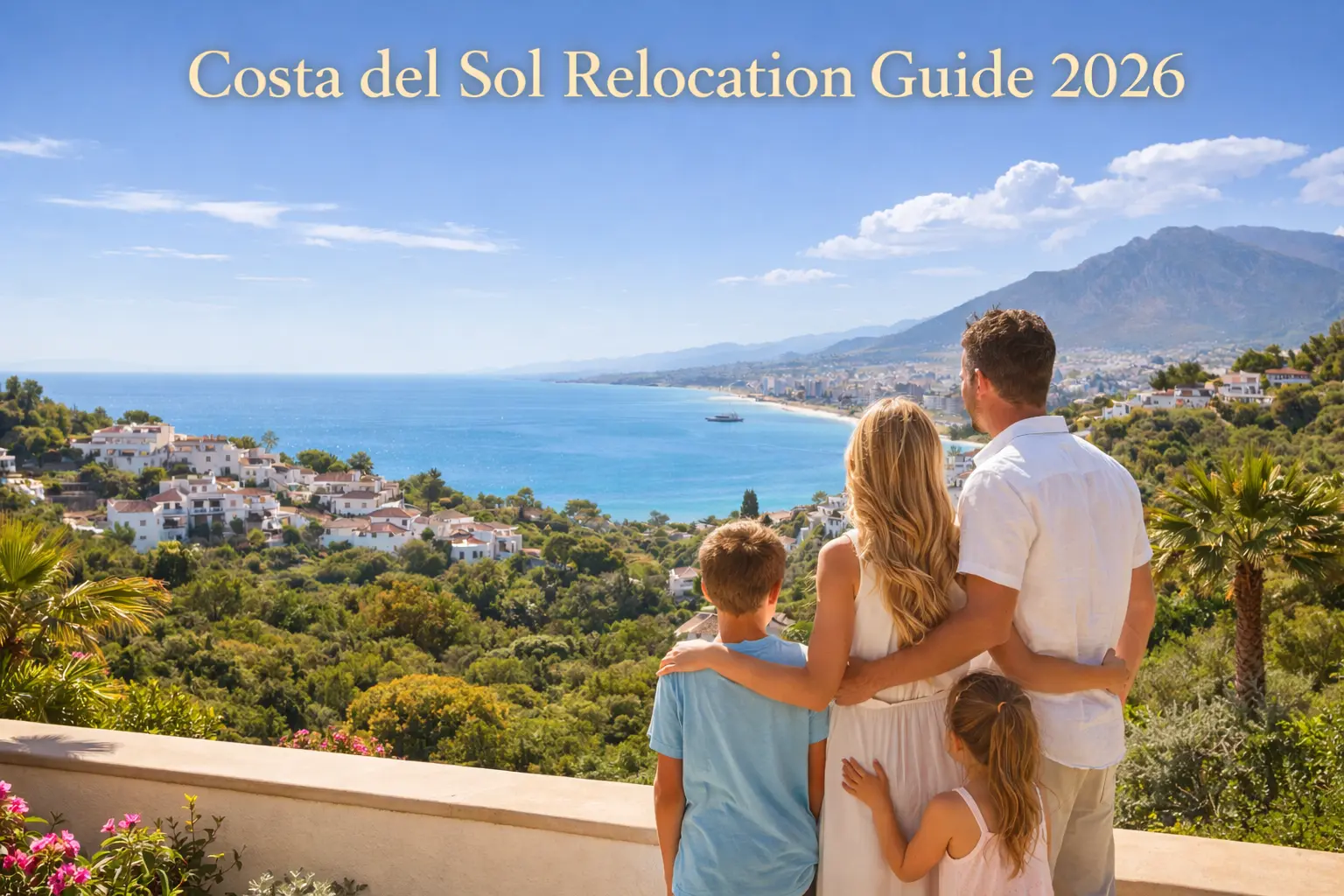
There comes a point, for many internationally mobile families, when the question quietly shifts.
It is no longer simply about where you can live well — but where you can live well consistently. Where the pace feels sustainable. Where daily life is not just efficient, but enjoyable. Where the environment supports the way you want to raise a family, build a business, or spend your time.
For a growing number of people, that answer is now pointing towards the Costa del Sol.
Not as a holiday destination, but as a place to live properly.
A Different Kind of Appeal
The Costa del Sol has undergone a quiet transformation over the past decade. What was once seen primarily as a seasonal destination has matured into a fully functioning international base — one that combines infrastructure, lifestyle and long-term livability in a way that feels increasingly rare.
The appeal is not built on a single factor. It is the combination that matters.
There is the climate, of course — over 300 days of sunshine a year. But more importantly, there is a rhythm to life here that feels markedly different from larger global cities. Days unfold more naturally. Time outdoors becomes part of daily routine rather than an occasional luxury. The environment encourages balance rather than constant acceleration.
And yet, it remains highly connected. Málaga Airport links seamlessly with the rest of Europe and beyond. International schools are well established. Healthcare is excellent. The infrastructure is already in place.
It is this balance — between ease and sophistication — that defines the region.
Finding Your Place on the Coast
Relocating to the Costa del Sol is not about choosing a single destination. It is about understanding a landscape made up of distinct, carefully layered communities.
Marbella offers energy and immediacy — beach clubs, restaurants, a social rhythm that feels vibrant and outward-facing. It appeals to those who enjoy being in the centre of things.
Benahavís, just minutes inland, provides a different experience. Here, the focus shifts towards space, privacy and elevation — both literally and figuratively. Gated communities, golf courses and panoramic views create a more residential, more considered environment. For many families, this is where the balance feels right.
Estepona continues to evolve quietly to the west, offering a softer, more understated lifestyle with increasing depth and appeal.
Choosing between them is less about which is “best,” and more about which aligns with how you want to live on a daily basis.
Read our Benahavís area guide →
The Family Perspective
For families, relocation decisions tend to crystallise around one central question: does the environment support the life we want to build?
On the Costa del Sol, the answer is often yes — but for reasons that go beyond the obvious.
International schools are well regarded and widely accessible, particularly in and around Marbella and Benahavís. But just as important is what exists outside the classroom. The ability for children to spend time outdoors year-round. The sense of safety. The opportunity for a more active, less pressured daily rhythm.
It is a different kind of upbringing — one that feels both international and grounded.
Explore schools in and around Benahavís →
Property, Patience and Perspective
Property is often part of the relocation conversation, but it rarely needs to be the first decision.
One of the advantages of moving to the Costa del Sol is the flexibility it offers. Many families choose to rent initially, allowing themselves time to understand the nuances of different areas — school runs, traffic patterns, orientation, community feel.
Others arrive with a clearer sense of direction and move directly into ownership, particularly when they already know the region well.
There is no universal approach. The key is not to rush.
The market itself remains active, particularly in prime locations where demand from international buyers continues to underpin values. But the best outcomes tend to come from decisions made with clarity rather than urgency.
Download our full buying property in Spain guide →
The Practical Layer
Every relocation has a practical dimension — cost of living, healthcare, logistics, residency.
What distinguishes the Costa del Sol is how seamlessly these elements integrate into daily life. Private healthcare is accessible and efficient. Dining, leisure and everyday expenses offer strong value relative to the quality provided. The overall cost structure, while not low in absolute terms, tends to feel proportionate to the lifestyle delivered.
Residency, particularly for non-EU nationals, has also become more accessible through routes such as Spain’s Digital Nomad Visa — a structure that allows internationally mobile professionals to establish a base in Spain without fundamentally restructuring their income.
Read about Spain’s Digital Nomad Visa in 2026 →
A Shift in Daily Life
What becomes apparent, often quite quickly, is that the move is not just geographical.
Daily life changes in more subtle ways.
Mornings begin with light rather than traffic. Evenings extend naturally, often outdoors. Weekends are not something to escape into — they are simply a continuation of a lifestyle that already feels balanced.
There is a sense, difficult to quantify but easy to recognise, that life has become less compressed.
For many, that is the real reason the move works.
Final Thought
The Costa del Sol is not about reinvention. It is about refinement.
It offers the opportunity to take what already works — career, family, mobility — and place it within an environment that supports it more naturally.
For those considering a move, the question is rarely whether the region delivers. It is whether it aligns with the life you want to build next.
And increasingly, the answer is yes.
Related Reading
Moving to Spain in 2026
A calm overview of the main Spanish visa options for people planning a move from outside Spain.
Family Guide to Moving to the Costa del Sol
A practical companion for families weighing schools, lifestyle, daily routines and where to settle.
Tax Guide for Moving to Spain
An accessible starting point for understanding tax considerations when relocating to Andalucía.
Have a Question About Benahavís?
Darren & Angelina — your Personal Property Concierge — can help with property, relocation, lifestyle and area questions across Benahavís. Send us a short message and we’ll point you in the right direction.
Important Note
This guide is for general information only and does not constitute legal, tax or financial advice. Relocation decisions should always be supported by professional advice tailored to your individual circumstances.
Looking for a home outside Benahavís?
Holiday Homes Spain
covers the whole Costa del Sol.